To reduce ecommerce friction, brands need to understand not just where shoppers drop off, but why they hesitate in the first place.
Friction rarely looks dramatic. It appears in the small pauses: lingering on a product page, comparing options without deciding, or abandoning a cart at checkout. These moments reflect uncertainty, overwhelm, or perceived risk.
When brands recognize these signals and respond in real time, they can ease hesitation, build confidence, and turn stalled decisions into conversions. That is the approach Upsellit takes.
What Is Ecommerce Friction?
Ecommerce friction refers to anything in the online shopping experience that creates resistance, uncertainty, or doubt and prevents shoppers from completing a purchase.
Common examples include unclear product information, decision overload, missing trust signals, perceived risk, and late stage hesitation at checkout. Reducing friction means removing or resolving these barriers so shoppers can move forward with confidence.
What Causes Shopper Hesitation?
Shopper hesitation occurs when buyers feel uncertain during the decision making process. As confidence drops, friction increases and conversions suffer.
The most common causes include:
- Uncertainty about product fit, features, or overall value
- Too many options leading to decision fatigue
- Limited social proof or trust indicators
- Fear of missing a better deal
- Concerns about availability or urgency
- Unexpected costs or second thoughts at checkout
If these concerns are not addressed in real time, they interrupt the customer journey and often lead to abandonment.
Where Ecommerce Friction Appears
Product discovery and comparison
Shoppers hesitate when they are unsure which product best fits their needs or how options differ from one another.
Product detail pages
Questions about quality, popularity, performance, or value can slow decision making if they go unanswered.
Cart and checkout
Late stage hesitation is often driven by price sensitivity, promotion uncertainty, shipping concerns, or second guessing the purchase.
Reducing ecommerce friction requires addressing hesitation at each of these moments, not just at checkout.

How Can Brands Reduce Ecommerce Friction?
Brands reduce ecommerce friction by identifying hesitation points in the customer journey and responding with real time reassurance, guidance, or incentives that address the shopper’s specific concern.
Upsellit pairs behavioral signals with targeted solutions designed to build confidence and remove uncertainty at the exact moment it appears.
On-site Comparison Modals
When shoppers hesitate between similar products, comparison modals clearly display key features, benefits, and value points side by side. This allows shoppers to evaluate options quickly without leaving the page, reducing uncertainty and decision fatigue.
Social Proof
Many shoppers look for reassurance that others are engaging with the same products. Strategic social proof highlights recent views, purchases, and activity to demonstrate demand in real time. By reinforcing trust and credibility at critical moments, it validates the purchase decision and lowers perceived risk.
Low Stock Alerts
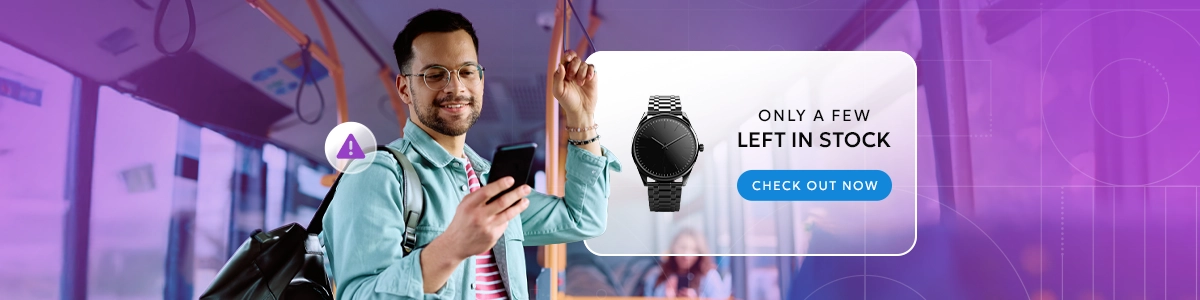
Indecision often stems from waiting too long. Low stock alerts communicate limited availability in a transparent way, encouraging timely action before interest fades.
Clear Choice Product Quiz
When shoppers are unsure what they need, a guided quiz simplifies the process. Clear Choice identifies the best product based on individual preferences and needs, removing guesswork and streamlining product discovery.
Promotions in the Cart and at Checkout
Price sensitivity and value uncertainty frequently contribute to cart abandonment. Targeted promotions in the cart and at checkout reinforce value at the moment hesitation appears, removing final barriers without relying on blanket discounts.
How Reducing Ecommerce Friction Improves Conversions
Reducing ecommerce friction improves conversions because it removes uncertainty at every stage of the journey. When shoppers feel confident, they move forward.
The results typically include:
- Higher conversion rates
- Lower cart abandonment
- Faster decision making
- Increased shopper confidence
- A smoother, more intuitive customer experience
See Ecommerce Friction Reduction in Action
Understanding shopper hesitation is the first step. The next is seeing how real time messaging and personalized engagement work together to drive measurable results.
Upsellit’s Website Experience case study demonstrates how targeted strategies reduce ecommerce friction and increase conversions.