


Black Friday Cyber Monday (BFCM) brings some of the year’s most motivated shoppers to ecommerce websites. They have researched products, compared options, and often arrive ready to buy.
But high purchase intent does not always translate into higher conversions.
The challenge during peak season is not just driving traffic. It is helping shoppers navigate expanded product catalogs, competing promotions, and countless purchase decisions once they arrive.
In fact, not having enough product information is one of the top frustrations online shoppers experience worldwide, according to a survey of more than 24,000 consumers.
During BFCM, that challenge becomes even greater. When shoppers cannot quickly determine which product best fits their needs, they may leave to continue comparing options elsewhere.
That is where guided shopping for ecommerce BFCM strategies comes in.
In this guide, we will explain what guided shopping is, why it matters during BFCM, and what brands should have in place before peak season arrives.
More Traffic Does Not Always Mean More Conversions
Holiday traffic is only valuable when shoppers can easily find what they need.
During BFCM, ecommerce brands often feature more products, promotions, and limited-time offers than usual. While these campaigns create more opportunities to purchase, they also create more decisions for shoppers to make.
The more choices shoppers face, the harder it becomes to confidently choose the right product.
This challenge is especially significant on mobile devices. Mobile recently accounted for 57% of Cyber Monday online sales, meaning many shoppers are browsing and purchasing from smaller screens where every additional click or comparison can introduce friction.
Driving more visitors to your site is only half the equation. If shoppers struggle to narrow their options or understand which product best matches their needs, increased traffic will not necessarily lead to increased conversions.
What Guided Shopping Actually Means
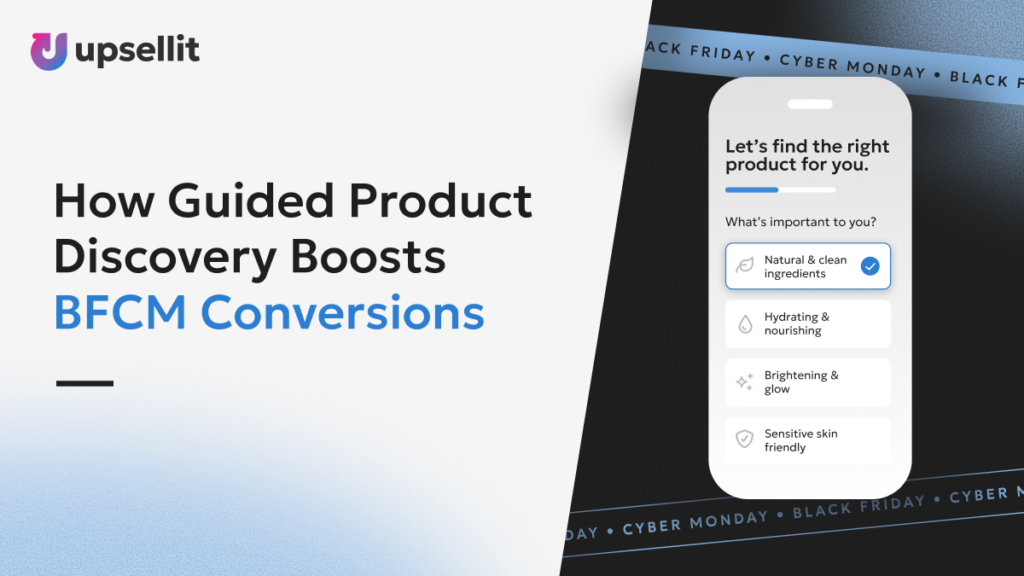
Guided shopping for ecommerce BFCM strategies helps shoppers discover the right product, instead of leaving them to navigate a catalog alone.
Traditional ecommerce browsing typically requires shoppers to:
- Search for products
- Filter options
- Compare items
- Review details
- Make a decision
Guided shopping shifts some of that work from the shopper to the brand. Through personalized questions, behavioral insights, and relevant recommendations, shoppers receive guidance based on their goals and purchase intent.
Unlike traditional product discovery, guided shopping helps answer a key question:
“What product is actually right for me?”
This becomes especially valuable during BFCM, when shoppers have more choices, less time, and more competing retailers available. If finding the right product feels difficult, they can quickly move on.
How to Recognize When a Shopper Needs Help
An engaged shopper and a confused shopper can look very similar in analytics.
Both may spend several minutes browsing. Both may visit multiple product pages. Both may appear interested.
The difference is intent.
A confident shopper is collecting final details before purchasing. A hesitant shopper is trying to determine whether they are looking at the right option.
Common signs that a shopper may need additional guidance include:
- Viewing multiple similar products without adding one to the cart
- Returning to the same product pages repeatedly
- Spending significant time browsing without taking action
- Comparing products before making a decision
These behaviors become even more common during BFCM as shoppers evaluate more products, discounts, and retailers than they normally would.
Recognizing hesitation while purchase intent is still high creates an opportunity to provide helpful guidance before shoppers leave.
For brands looking to better understand these behavioral signals, our guide to behavior-based marketing explores how real-time shopper actions can be used to deliver more relevant onsite experiences.
What a Guided Shopping Experience Should Do
During BFCM, a well-built guided experience moves shoppers from browsing to buying. A generic one just adds noise.
Here’s what it actually needs to do:
Ask about goals, not specs. Most shoppers don’t know the difference between a 400-thread-count sheet and a 600-thread-count sheet. They know they want something soft that doesn’t pill. Good guided experiences start from what the shopper is trying to accomplish, not from product attributes they’d have to Google first.
Use what’s already there. Browsing history, previously viewed products, what’s in the cart: all of it tells a story about what the shopper wants. A good experience picks up those signals instead of treating every session like a blank slate.
Narrow the options without taking the wheel. The goal is a shorter, more relevant list, not a single forced recommendation. Shoppers want to feel like they made the choice, even if they had help getting there.
Keep up as the shopper changes their mind. Someone who starts browsing running shoes and ends up looking at trail hikers came in looking for one thing and found they needed something different. A good experience follows that shift rather than ignoring it.
Feel like it belongs there. If it looks like a third-party widget and reads like a survey, it’s going to get ignored. Tone, design, and messaging all need to match the brand. The shopper shouldn’t be able to tell where the site ends and the tool begins.
One example is Upsellit’s Clear Choice. Clear Choice is an AI-powered guided shopping experience that combines dynamic questions, behavioral signals, and continuous optimization to help shoppers find products that match their needs.
Instead of overwhelming shoppers with more options, Clear Choice creates a clearer path toward the products most relevant to each visitor.
Where Guided Experiences Fit in the Shopping Journey
The best guided shopping experiences appear at the moments when shoppers are most likely to hesitate.
Category pages
Large product catalogs can quickly become overwhelming. Guided experiences help shoppers narrow options based on their needs before they spend time comparing dozens of products.
Product pages
Product pages are where comparison shopping often peaks. Guided shopping helps visitors understand which product is the best fit before they leave to research elsewhere.
Homepage and sitewide placements
Some shoppers arrive with only a general idea of what they need. Providing guidance earlier in the journey helps them reach relevant products faster.
Guided experiences can also appear through different onsite placements, including overlays, grab tabs, boost bars, and sidebars, allowing brands to provide assistance without disrupting the shopping experience.
What to Have in Place Before BFCM
A guided shopping experience should reflect your BFCM strategy, not just your everyday catalog.
Before peak season arrives, brands should:
- Review session data to identify where shoppers commonly hesitate
- Determine which categories will have the largest promotional assortments
- Define what the right product looks like for different shopper needs
- Build question logic around BFCM products and promotions
- Test the experience before traffic increases
The goal is to have your strategy ready before shoppers arrive, not while Cyber Week traffic is already underway.
For brands working with Upsellit, Clear Choice campaigns are typically implemented in about two weeks, making early planning essential for a successful holiday launch.
The Window Is Open
By the time shoppers arrive during BFCM, they are already ready to buy.
The brands that win are not always the ones offering the biggest discounts. They are the ones that make purchasing easier.
When shoppers cannot quickly determine which product is right for them, many leave before adding anything to their cart. Guided shopping removes that friction by simplifying product discovery and building confidence before checkout.
Like every other part of a successful BFCM strategy, this requires preparation before peak season begins.
The sooner you prepare, the more ready you will be when shoppers start arriving.
Frequently Asked Questions
What is a guided shopping experience in ecommerce?
A guided shopping experience helps shoppers find the right product through personalized questions, behavioral signals, and tailored recommendations. Instead of searching and comparing products alone, shoppers receive guidance based on their needs and purchase intent.
Why do conversion rates drop during high-traffic periods like BFCM?
Higher traffic also brings more competition, promotions, and products to evaluate. If shoppers cannot quickly identify the right product, they may delay their purchase or leave to compare options elsewhere.
What is choice overload and how does it affect ecommerce conversions?
Choice overload occurs when shoppers have too many options to evaluate. Instead of increasing confidence, excessive choices can make decisions more difficult and prevent shoppers from completing purchases.
How do you know when a shopper needs help finding a product?
Common signs include viewing multiple similar products, repeatedly returning to product pages, spending significant time browsing without action, and comparing several options before purchasing.
How do you reduce shopper decision fatigue during BFCM?
Brands can reduce decision fatigue by simplifying product discovery. Guided shopping experiences, personalized questions, and behavioral insights help shoppers quickly find products that fit their needs.
Does guided shopping work for large catalog sites?
Yes. Guided shopping is especially valuable for brands with large product assortments because it helps shoppers narrow hundreds of options into a smaller group of relevant products.
What’s the difference between guided shopping and product recommendations?
Product recommendations suggest items a shopper may be interested in based on browsing or purchase history. Guided shopping actively helps shoppers determine which product best fits their needs through questions and behavioral insights.
Get Ready for BFCM
Get ready for BFCM with a detailed review of your ecommerce site and a roadmap to fix revenue gaps before peak season.

Not ready for an audit yet? Start with the BFCM 90-Day Preparation Plan to build your foundation before peak season.
Want to see how top-performing brands prepare for peak season? Read the BFCM Case Study.