

Email and SMS remarketing is the use of permission-based email and text messages to re-engage ecommerce shoppers after specific behaviors, such as product browsing, cart activity, checkout starts, product interest, or previous purchases.
Unlike general email and sms marketing, remarketing is triggered by shopper behavior rather than sent broadly to an entire audience. These messages help brands respond directly to shopper intent and guide reachable shoppers toward the next relevant step in their journey.
As acquisition costs rise and retention becomes more important, behavior-based messaging has become a key part of ecommerce conversion optimization and customer retention strategies.
This guide focuses on email and SMS messages sent after a shopper has been identified, opted in, or otherwise become reachable through a permission-based channel. For on-site opt-in strategy, see our Lead Capture guide.
By the end of this guide, you’ll understand how email and SMS remarketing campaigns work, where they fit across the customer journey, and which strategies help improve recovery revenue, retention, and customer lifetime value.
TL;DR
- Email and SMS remarketing use permission-based messages to reconnect with shoppers after specific behaviors.
- Email is best suited for detailed, visual, or content-rich messages.
- SMS is best suited for short, timely, high-visibility reminders and alerts.
- Remarketing differs from general marketing because it is triggered by shopper behavior.
- Common ecommerce remarketing campaigns include browse, cart, checkout, back-in-stock, price-drop, post-purchase, and winback campaigns.
- Performance depends on trigger quality, timing, channel coordination, suppression logic, consent, deliverability, and testing.
What is Email and SMS Remarketing?

In practice, email and SMS remarketing uses shopper behavior to decide which message should be sent, which channel should deliver it, and what next step the shopper should be asked to take.
Instead of sending the same campaign to a broad audience, remarketing uses a shopper’s previous actions to determine whether they should receive a relevant message.
Those actions may include viewing a product, adding an item to cart, starting checkout, requesting a product alert, or making a previous purchase. Because the message is tied to something the shopper already did, remarketing is more context-specific than a general promotional campaign.
The purpose of remarketing is to continue a shopper journey that has already started. The message should connect back to the shopper’s previous action and make the next step clear.
Email Remarketing vs. SMS Remarketing
Email and SMS can both support remarketing, but they are useful in different situations.
Email gives brands more room to explain, merchandise, and personalize. It works well when the message needs product details, visuals, recommendations, or longer-form content.
SMS gives brands a shorter and more immediate way to reach shoppers. It works best when the message is simple, timely, and easy to act on.
If both channels are used in the same sequence, each message should add something useful rather than repeat the same information in a different format.
What is the Difference Between Marketing vs. Remarketing?
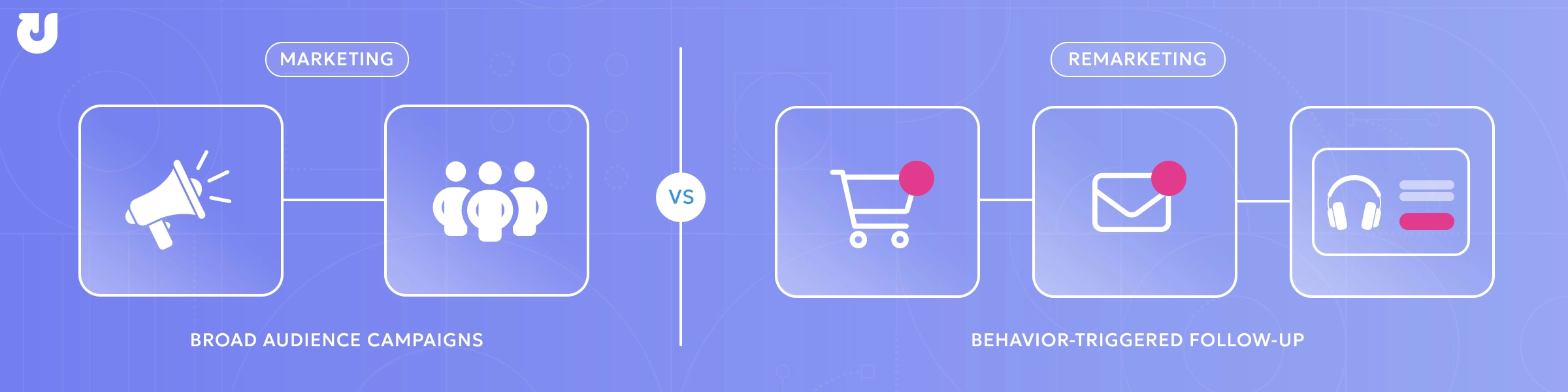
Email and SMS marketing include all promotional, lifecycle, and customer communication sent through email or text. This can include newsletters, sale announcements, product launches, welcome messages, loyalty updates, and post-purchase communication.
Remarketing is a more specific type of email and SMS marketing. Instead of being sent broadly to a list or segment, remarketing is triggered by a shopper’s previous action.
The distinction matters because remarketing uses behavioral context. The message is shaped by what the shopper already did, not just by the audience list they belong to.
What is the Difference Between Remarketing vs. Retargeting?
Remarketing and retargeting are often used interchangeably, but they usually refer to different ways of reaching shoppers again.
Remarketing re-engages reachable or opted-in shoppers through owned channels such as email and SMS.
Retargeting re-engages shoppers through paid media channels such as display ads, paid social, and search advertising.
Ecommerce brands may use both, but they should be planned and measured separately because they use different channels, costs, consent requirements, and performance metrics.
The table below summarizes how email marketing, SMS marketing, email remarketing, SMS remarketing, and retargeting differ by channel, trigger, and use case.
|
Strategy |
Channel |
Trigger |
Example |
|
Email marketing |
|
Campaign or lifecycle stage |
Newsletter, welcome series, product launch |
|
SMS marketing |
Text message |
Campaign or lifecycle stage |
Sale alert, loyalty update, shipping reminder |
|
Email remarketing |
|
Shopper behavior |
Browse reminder, cart recovery email |
|
SMS remarketing |
Text message |
Shopper behavior |
Abandoned cart text, back-in-stock alert |
|
Retargeting |
Paid media |
Paid audience or site behavior |
Display ad, paid social ad, search ad |
Why Email and SMS Remarketing Matter for Ecommerce
Email and SMS remarketing matter because most ecommerce shoppers do not complete every journey in one session. They may browse products, compare options, add items to cart, or start checkout before leaving the site.
Remarketing helps brands reconnect with shoppers who have already shown intent. By using permission-based channels, ecommerce brands can create more value from existing traffic, support owned-channel revenue, and reduce reliance on constantly acquiring new visitors.
Remarketing also supports retention after purchase. Shopify notes that existing customers are typically more likely to purchase again than someone new, and that retention strategies can be highly cost-effective because existing customers are already familiar with the brand and may have opted in to email or SMS.
The value of remarketing comes from relevance. Messages based on what shoppers have already done can feel more useful than broad promotional campaigns.
How Email and SMS Remarketing Works
Email and SMS remarketing campaigns are powered by behavioral automation. When a shopper takes a meaningful action, that behavior can trigger a relevant email, SMS, or coordinated sequence.
Image inspo: flow chart or a sequence/funnel
Shopper action → Shopper identified → Campaign triggered → Relevant next step → Performance measured
A typical remarketing flow includes five steps:
1. A Shopper Takes A Meaningful Action
Ecommerce remarketing begins when a shopper does something that signals interest or intent.
This could include viewing a product, browsing a category, adding an item to cart, starting checkout, requesting a product alert, responding to a price change, or making a previous purchase.
These actions give the brand context for the next message.
2. The Shopper Is Identified
To send an email or SMS remarketing message, the brand needs a way to reach the shopper through a permission-based channel.
This may happen through an email capture form, SMS opt-in, returning shopper recognition, customer account, or checkout information.
For more on collecting contact information before a shopper leaves the site, see our Lead Capture guide.
3. A Campaign Is Triggered
After the shopper is identified, the ecommerce platform or marketing automation system can trigger an email, SMS, or coordinated sequence based on the shopper’s behavior.
The timing should match the context. Some messages are most useful shortly after the action, while others make more sense days or weeks later.
4. The Message Points To A Relevant Next Step
The message should connect back to the action the shopper already took.
Depending on the campaign, that next step may be returning to a product page, saved cart, checkout, back-in-stock item, price-drop offer, or post-purchase action.
The goal is to make it easy for the shopper to continue the journey they already started.
5. Performance Is Measured
After the campaign runs, brands measure performance across engagement, conversion, revenue, recovery, and list health. These results help teams refine timing, messaging, channel mix, and suppression rules over time.
From there, brands can decide which campaign type, channel mix, and timing best fit the shopper’s behavior.
Types of Ecommerce Remarketing Campaigns
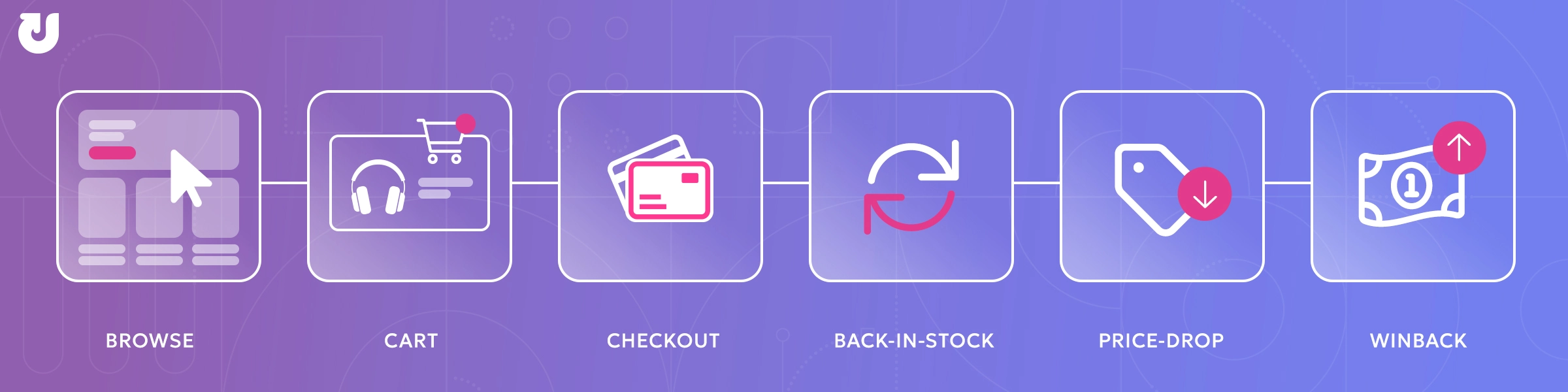
Ecommerce remarketing campaigns can support different shopper behaviors, from early product interest to repeat purchase opportunities. These campaign types should be treated as separate strategies because each one reflects a different level of shopper intent.
Browse Remarketing
Browse remarketing campaigns target shoppers who viewed products, categories, or content but did not take a deeper action, such as adding an item to cart. These campaigns usually reconnect shoppers with the products or categories they were already exploring.
Email is often the better fit for browse remarketing because it can include product imagery, recently viewed items, or related recommendations. SMS should be used more selectively because browse behavior may not always show strong enough intent for a text message.
Cart Remarketing
Cart remarketing campaigns target shoppers who added one or more items to cart but did not complete the purchase. These campaigns remind shoppers of the items they selected and make it easier to return to the cart.
Email can include cart contents, product details, incentives, or merchandising support. SMS may be useful when the shopper has opted in and the message is timely, concise, and tied to a clear next step.
Checkout Remarketing
Checkout remarketing campaigns focus on shoppers who started checkout but did not complete the order. Because checkout activity usually signals stronger purchase intent, these messages should be timely, direct, and easy to act on.
Email can support more detailed checkout reminders, while SMS may be useful for short, time-sensitive reminders when consent is available.
For deeper insights on cart abandonment behavior and checkout recovery strategies, visit the Cart and Checkout Abandonment guide.
Back-in-Stock Remarketing
Back-in-stock remarketing campaigns notify shoppers when an unavailable product, size, color, or variant becomes available again. These campaigns work because the shopper has already shown interest in a specific item.
The message should clearly identify the product and make it easy to return to the product page before inventory changes again.
Price-Drop Remarketing
Price-drop remarketing campaigns notify shoppers when a product they viewed, saved, or added to cart becomes available at a lower price. These campaigns are useful for shoppers who showed interest but may have hesitated because of price.
The message should make the price change clear and direct the shopper back to the relevant product or cart.
Post-Purchase Remarketing
Post-purchase remarketing campaigns engage customers after they complete an order. These campaigns may support product education, review requests, replenishment reminders, cross-sell opportunities, loyalty enrollment, or repeat purchase behavior.
Winback Campaigns
Winback campaigns target customers who have not purchased or engaged in a defined period of time. The goal is to reactivate customers who already know the brand but may need a relevant reason to return.
The timing of a winback campaign should depend on the brand’s purchase cycle. A replenishable product may need a shorter winback window than a higher-consideration or seasonal purchase.
How to Coordinate Email and SMS Remarketing Without Over-Messaging
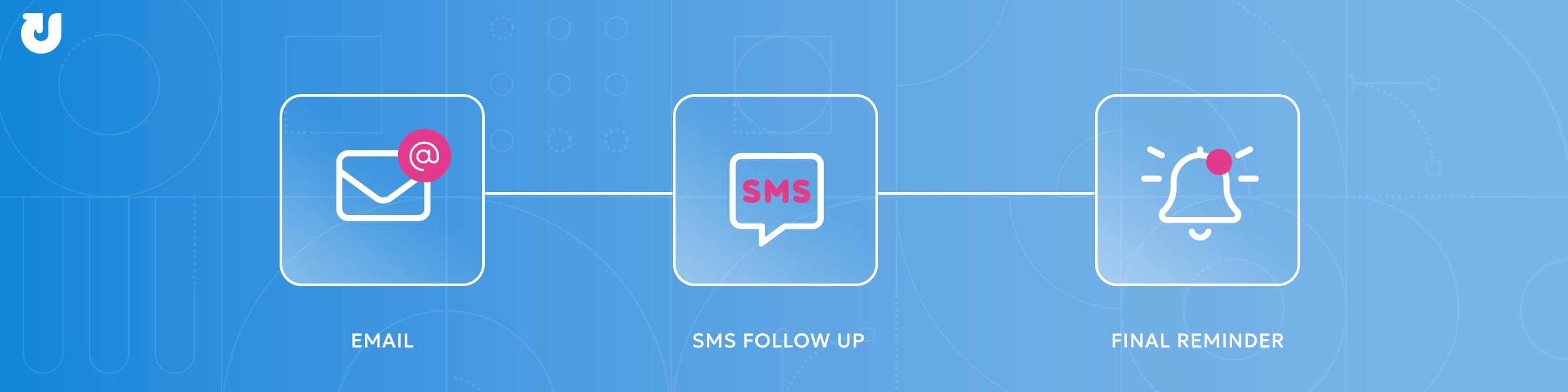
Email and SMS work best when they are coordinated rather than duplicated. If both channels are used in the same remarketing strategy, each message should have a clear role, timing, and reason for being sent.
The goal is not to reach shoppers in as many places as possible. It is to create a sequence that feels connected, relevant, and respectful of the shopper’s attention.
A coordinated email and SMS remarketing strategy should define:
- Which channel sends first: Email may be better for messages that need product details, visuals, or more context. SMS may be better for short, timely reminders or alerts.
- How much time passes between messages: Messages should be spaced far enough apart to avoid feeling repetitive, but close enough to stay relevant to the shopper’s original behavior.
- Which shoppers are eligible for SMS: SMS should only be used when the shopper has provided the proper consent and the message is appropriate for a text format.
- What each message adds: Every message in the sequence should add something useful, such as a clearer next step, a timely reminder, updated product information, or a reason to return.
- When the sequence should stop: Campaigns should stop when the shopper completes the intended action, opts out, becomes ineligible, or enters a higher-priority campaign.
For example, a cart remarketing sequence might start with an email that shows the selected products and links back to the cart. If the shopper has opted into SMS, a later text message may provide a shorter reminder with a direct return link. The SMS should not simply repeat the email; it should make the next step easier or more timely.
Coordinating email and SMS this way helps reduce message fatigue while keeping the remarketing experience focused on the shopper’s previous action.
Email and SMS Remarketing Best Practices
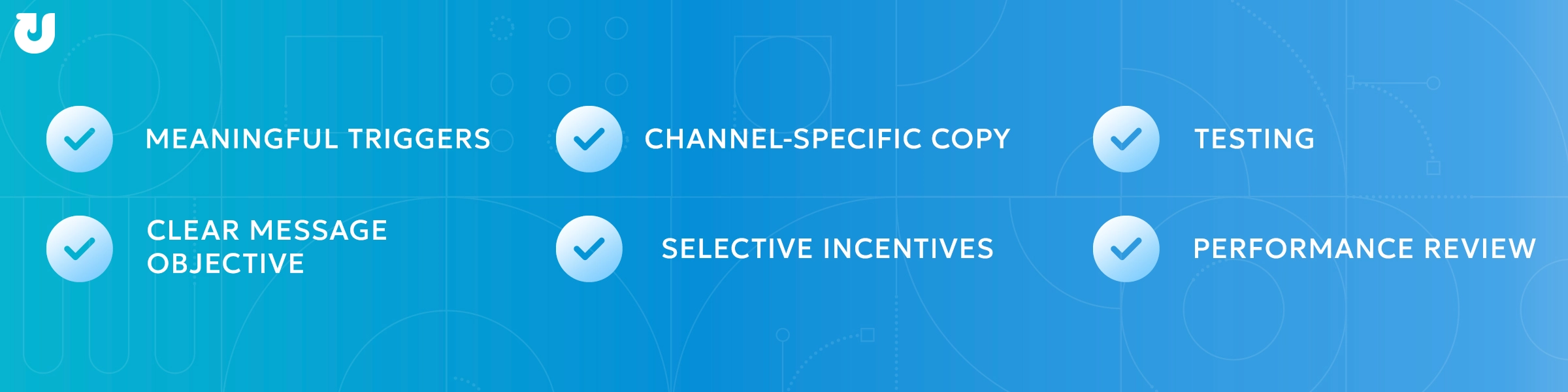
Strong remarketing campaigns are specific, timely, and easy to act on. Each message should connect clearly to the shopper behavior that triggered it and give the shopper a simple next step.
Use Meaningful Behavioral Triggers
Base remarketing campaigns on actions that show real shopper interest, such as product views, cart contents, checkout activity, product alert requests, purchase history, or lapsed engagement. Stronger triggers usually make it easier to create messages that feel relevant.
Give Each Message One Clear Goal
Every message should have a specific purpose. That goal might be to bring a shopper back to a product, return them to checkout, notify them about availability, encourage a repeat purchase, or reactivate a lapsed customer.
Avoid trying to accomplish too much in one message. The clearer the goal, the easier it is to write the subject line, SMS copy, creative, and CTA.
Write for the Channel
Email and SMS should not use the same copy in different formats. Email can support more context and product detail, while SMS should be short, direct, and easy to act on.
The message should fit the channel’s strengths while still connecting back to the shopper’s previous behavior.
Use Incentives Selectively
Not every remarketing message needs a discount. Helpful reminders, product availability updates, saved cart links, or relevant product information may be enough depending on the shopper’s intent.
Use incentives when they add a clear reason to act, but avoid training shoppers to expect a discount every time they leave or delay a purchase.
Test One Variable at a Time
Remarketing performance can be improved through testing, but each test should isolate one variable whenever possible. Brands may test sender names, subject lines, preheader text timing, creative, CTA language, or message order.
Testing one variable at a time makes it easier to understand what actually improved performance.
Suppression Logic: When Remarketing Should Stop
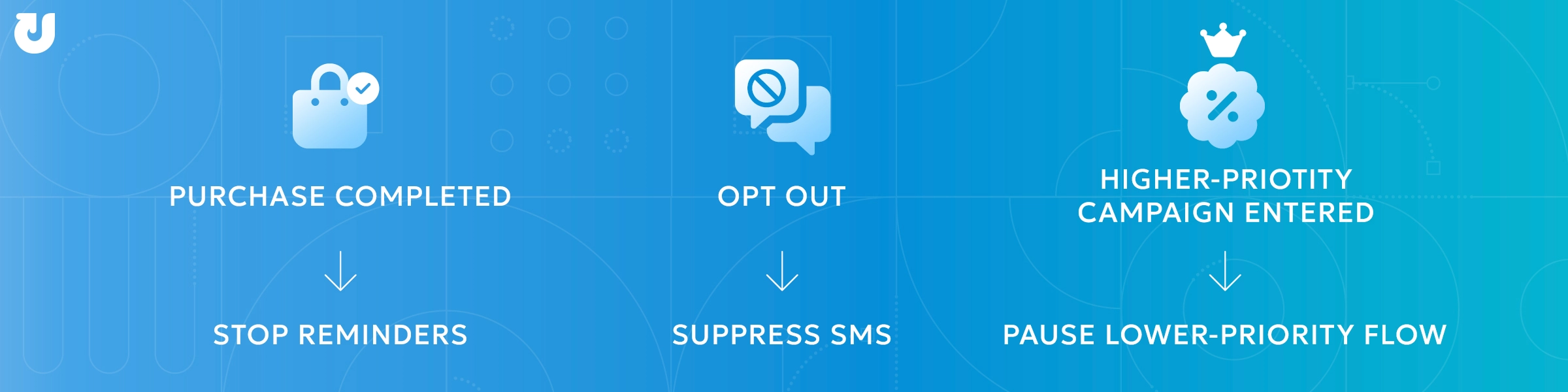
Suppression logic determines when a remarketing campaign should stop, pause, or change. Without suppression rules, shoppers may receive irrelevant messages after they purchase, opt out, become ineligible, or enter another campaign.
Common suppression rules include:
- Stop cart or checkout messages after purchase.
- Suppress SMS messages when the shopper has not provided SMS consent.
- Stop product alerts after the shopper purchases the item.
- Pause lower-priority campaigns when a shopper enters a higher-priority flow.
- Limit message frequency to reduce fatigue.
Suppression logic helps keep remarketing useful, relevant, and respectful of the shopper’s attention.
Consent, Compliance, and Deliverability
Email and SMS remarketing campaigns should be permission-based and aligned with applicable consent, unsubscribe, and opt-out requirements.
Because regulations vary by region, industry, and message type, brands should work with legal counsel to confirm compliance requirements.
Brands should also monitor email compliance requirements and SMS marketing compliance regulations, especially as privacy rules, carrier requirements, and platform policies evolve.
Key areas to monitor include:
- Email bounce rates
- Spam complaints
- Email unsubscribe rates
- SMS delivery rates
- SMS opt-out rates
- Message frequency
- Engagement trends
- Sender reputation
The goal is to keep remarketing messages useful, permission-based, and deliverable over time. One way to improve deliverability is to avoid spam-triggering email language, maintain list health, and monitor sender reputation.
How to Measure Email and SMS Remarketing Performance
Measuring email and SMS remarketing performance is not just about tracking opens, clicks, or revenue. Different campaign types reflect different levels of shopper intent, so they should not all be judged against the same benchmark.
For example, a checkout reminder is reaching someone who was close to purchasing, while a browse reminder is reaching someone who showed earlier-stage interest. A winback campaign is different again because it targets customers who have not engaged or purchased recently. Each campaign should be measured against the action it is designed to drive.
The most useful way to evaluate remarketing performance is by campaign type:
|
Campaign Type |
Primary Goal |
Metrics to Watch |
|
Browse remarketing |
Bring shoppers back to viewed products or categories |
Open rate, click rate, browse recovery rate |
|
Cart remarketing |
Return shoppers to selected items |
Click rate, cart recovery rate, revenue recovered |
|
Checkout remarketing |
Help shoppers complete a high-intent purchase path |
Conversion rate, checkout recovery rate, revenue recovered |
|
Back-in-stock alerts |
Convert product availability interest |
Click rate, conversion rate, revenue per alert |
|
Price-drop alerts |
Re-engage price-sensitive shoppers |
Click rate, conversion rate, revenue per message |
|
Post-purchase remarketing |
Encourage repeat engagement or repeat purchase |
Repeat purchase rate, revenue per customer, unsubscribe rate |
|
Winback campaigns |
Reactivate lapsed customers |
Winback conversion rate, click rate, unsubscribe rate |
Key Email and SMS Remarketing Formulas
|
Metric |
Formula |
|
Email open rate |
Emails opened ÷ emails delivered × 100 |
|
Email click rate |
Email clicks ÷ emails delivered × 100 |
|
SMS click rate |
SMS clicks ÷ SMS messages delivered × 100 |
|
Conversion rate |
Purchases or completed actions ÷ message clicks × 100 |
|
Revenue per email |
Revenue from email campaign ÷ emails delivered |
|
Revenue per SMS |
Revenue from SMS campaign ÷ SMS messages delivered |
|
Recovery rate |
Recovered purchases ÷ abandoned or eligible sessions × 100 |
|
Unsubscribe rate |
Unsubscribes ÷ messages delivered × 100 |
|
SMS opt-out rate |
SMS opt-outs ÷ SMS messages delivered × 100 |
Brands should also monitor list health and deliverability across all campaign types. If unsubscribe rates, SMS opt-outs, spam complaints, or bounce rates increase, the program may be sending too often or reaching shoppers with messages that no longer feel relevant.
The goal is to understand which campaigns are creating value, which ones may be causing fatigue, and which metrics need to improve before scaling the program.
Email and SMS Remarketing Examples for Ecommerce
The examples below highlight remarketing strategies from our ecommerce remarketing case study, showing how brands use behavior-triggered email and SMS to reconnect with shoppers after key onsite actions.
While the full case study also includes lead capture and Anonymous Visitor ID examples, this section focuses specifically on remarketing campaigns: what shopper behavior triggered each message, the strategy used to bring shoppers back, and the measurable impact on performance.
|
Use Case |
Trigger |
Result |
|
Browse remarketing |
Product views without cart activity |
30% conversion rate and 43% open rate |
|
Cart remarketing |
Items added to cart without purchase |
34% conversion rate, 69% open rate, and 37% click rate |
|
Checkout remarketing |
Checkout started but not completed |
39% conversion rate, 65% open rate, and 37% click rate |
|
Back-in-stock alerts |
Interest in unavailable products or variants |
21% conversion rate and 60% click rate |
|
Price-drop alerts |
Product interest followed by a price change |
73% lead collection rate, 22% open rate, and 25% click rate |
Browse Remarketing Emails Reconnect Shoppers With Viewed Products
A stationery and office supplies retailer used browse remarketing emails to re-engage shoppers who viewed products but did not add items to cart.
The campaign featured product recommendations based on browsing behavior alongside a “15% Off 3+ Items” incentive. Emails were sent one hour, 24 hours, and 72 hours after the browsing session, giving shoppers multiple opportunities to return to products or categories they had already explored.
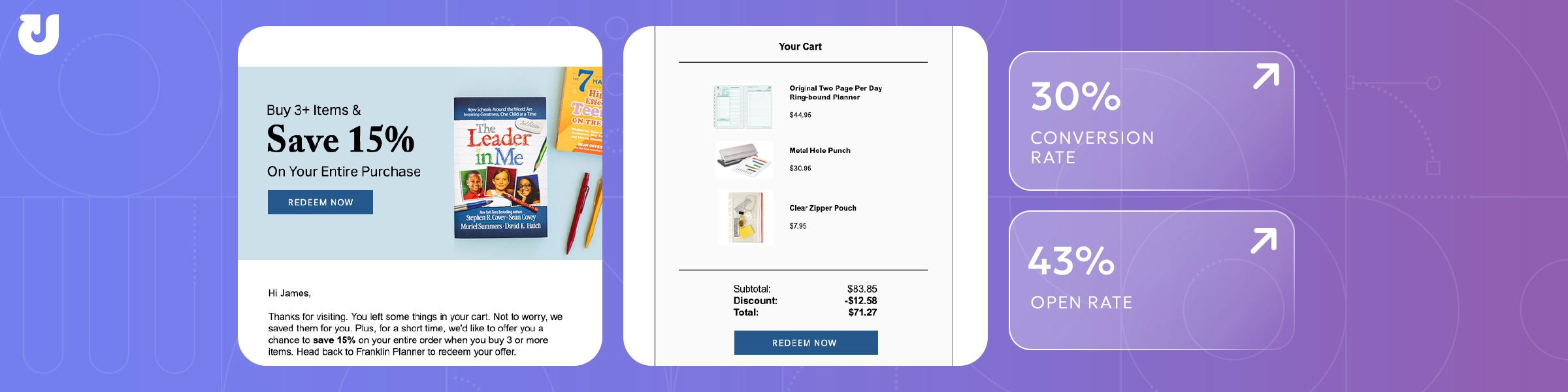
Result: The campaign achieved a 30% conversion rate and 43% open rate.
Cart Remarketing Emails Help Shoppers Return to Saved Items
A luxury sleepwear brand used cart remarketing emails to reconnect with shoppers who had selected items but had not completed their purchase.
After shoppers submitted their email address, they entered a three-email sequence featuring saved cart content, personalized discount calculations, and auto-applied incentives. The campaign made it easier for shoppers to return to the items they had already chosen.
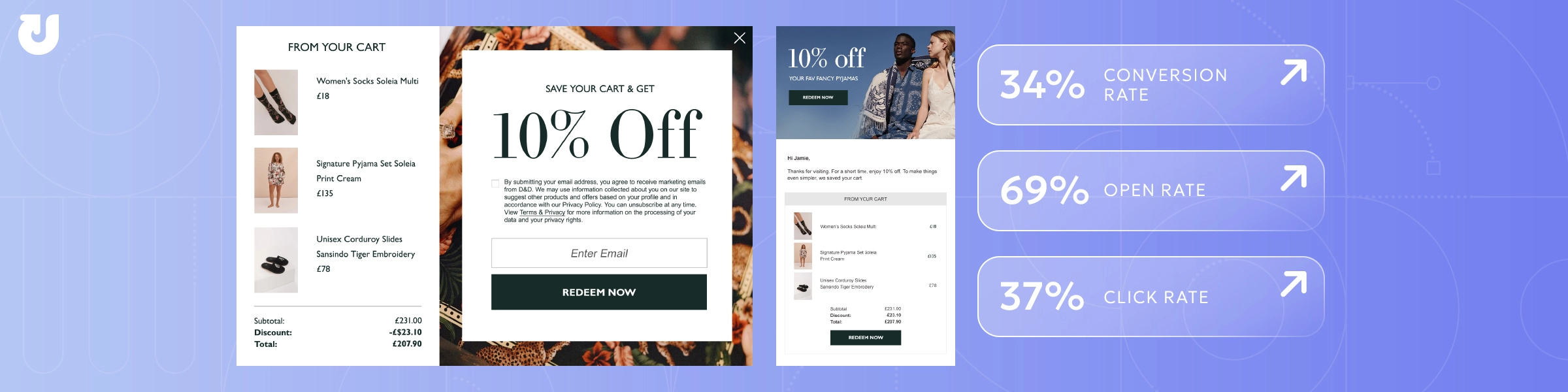
Result: The campaign achieved a 34% conversion rate, 69% open rate, and 37% click rate.
Checkout Remarketing Emails Re-Engage High-Intent Shoppers
A cigar and accessories retailer used checkout remarketing to re-engage shoppers who had started checkout but did not complete their order.
The campaign sent a recovery email one hour after checkout activity. The message combined a 15% discount, free shipping, and a live countdown timer to create a clear, time-sensitive reason to return.
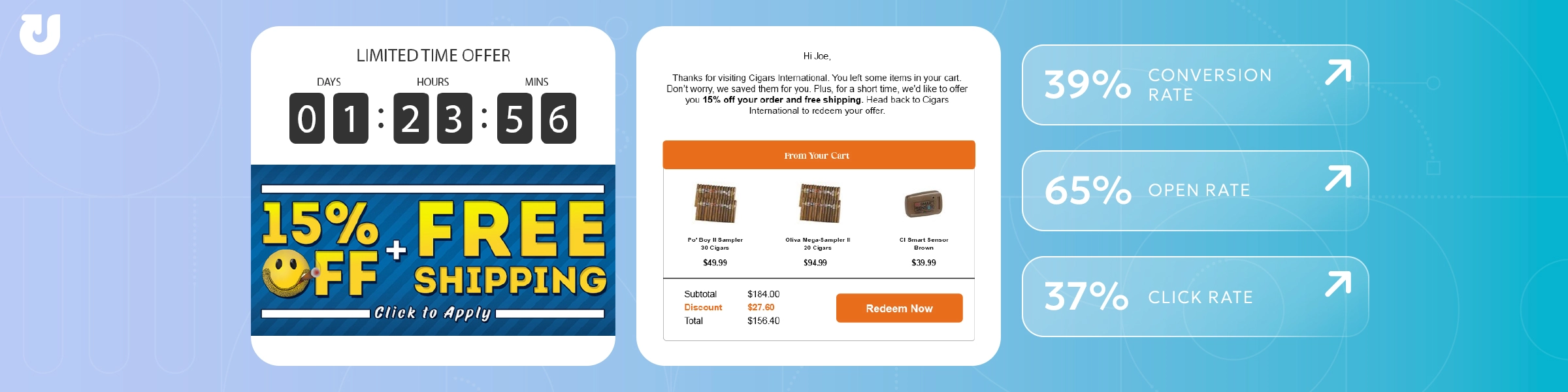
Result: The campaign achieved a 39% conversion rate, 65% open rate, and 37% click rate.
Back-in-Stock Remarketing Alerts Reconnect Shoppers With Available Products
A sporting apparel brand used back-in-stock remarketing to notify shoppers when unavailable products or sizes became available again.
When products or sizes were out of stock, shoppers could request a notification. Once inventory returned, automated back-in-stock emails directed shoppers back to the relevant product page while demand was still active.
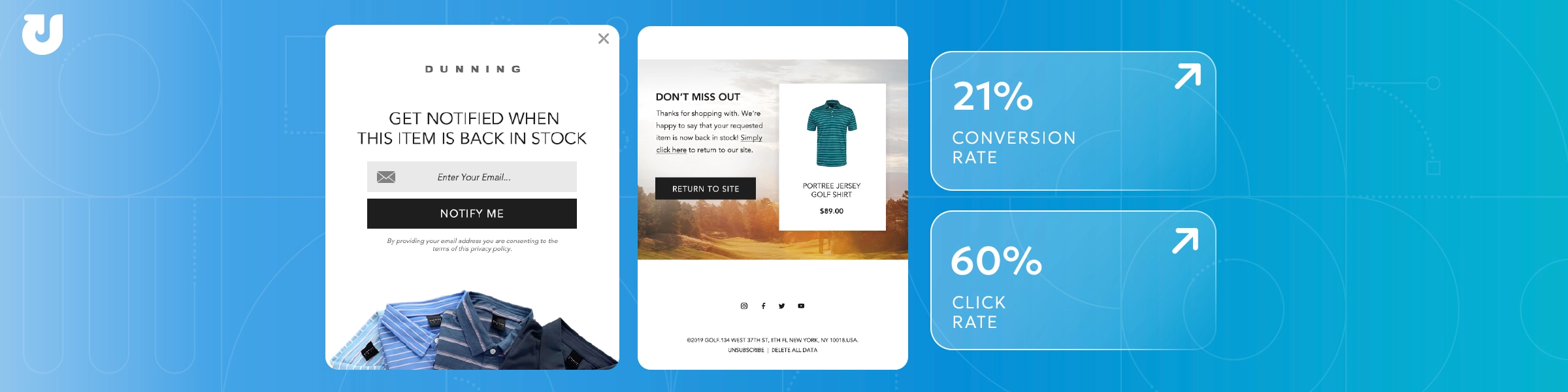
Result: The campaign achieved a 21% conversion rate and 60% click rate.
Price-Drop Remarketing Emails Re-Engage Price-Sensitive Shoppers
A cooking and kitchen appliance retailer used price-drop remarketing emails to reconnect with shoppers after items they had shown interest in were discounted.
When eligible products dropped in price, shoppers received a three-email sequence highlighting the updated price and linking back to the relevant product or cart. The campaign used the price change as a timely reason to return.
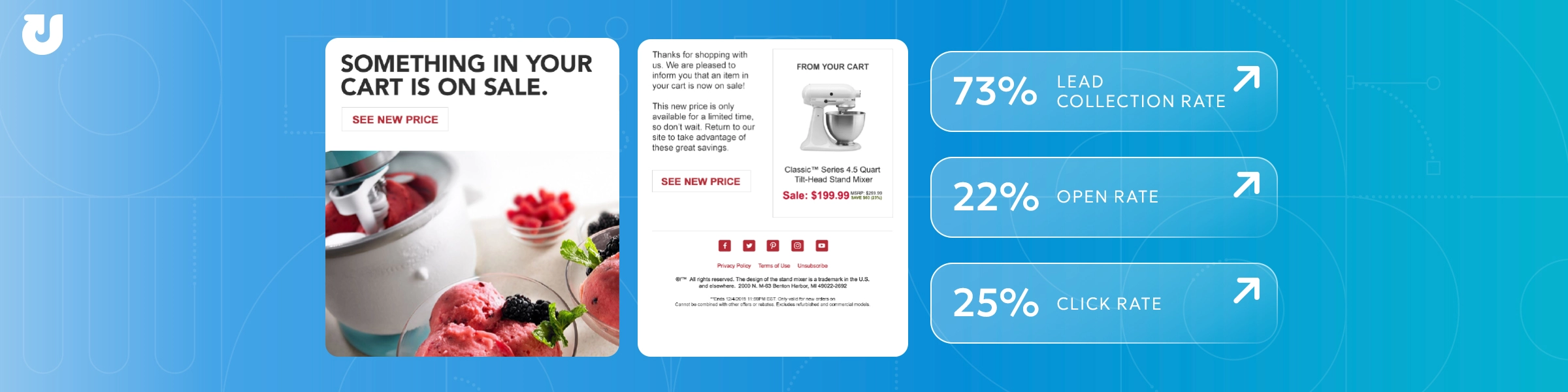
Result: The campaign achieved a 73% lead collection rate, 22% open rate, and 25% click rate.
When Internal Teams Need More Support
Email and SMS remarketing can become more complex as campaigns expand across more shopper behaviors, channels, and customer journey stages.
Early programs may only include a few automated emails or text messages. Over time, brands often need to manage more triggers, audience rules, creative variations, suppression logic, and performance reporting across both email and SMS.
Common signs that a remarketing program needs more structure include:
- Campaigns overlap or compete with each other.
- Email and SMS messages repeat the same information.
- Different campaign types are measured against the same benchmark.
- Testing happens inconsistently or without a clear hypothesis.
- Suppression rules are missing or unclear.
- Performance varies widely by campaign type.
- Internal teams do not have enough bandwidth to review and optimize campaigns regularly.
At that point, brands may need clearer campaign ownership, stronger automation logic, better testing processes, or additional support managing email and SMS together.
Partners like Upsellit can help manage remarketing campaigns in alignment with a brand’s existing email, SMS, ecommerce, and retention strategies. They can also support more advanced capabilities that internal teams may not have the bandwidth or technology to manage on their own, such as behavior-triggered campaign logic, dynamic messaging, suppression rules, testing, and performance optimization.
This gives internal teams more room to focus on the broader customer strategy while still improving the day-to-day performance of email and SMS remarketing campaigns.
Additional Resources on Remarketing
- 8 Spam Words to Remove From Your Emails
- 5 Steps to the Perfect Email Preheader
- 5 Sender Name Ideas to Increase Email Open Rates
- The Research Behind Effective Email Send Times
- How to Nurture and Engage Shoppers with SMS Remarketing
- Optimizing Your Messaging Strategy with Email and SMS
- Recover Lost Sales With Back in Stock Emails
- Reducing Unsubscribe Rates like an Email Marketing Expert
- Global Guide to Email Compliance
- SMS Marketing Compliance
- Remarketing Experience Case Study
- 27 Attributes of an Effective Email
Common Questions About Email and SMS Remarketing
What Is Email Remarketing?
Email remarketing is the use of permission-based emails triggered by shopper behavior to re-engage visitors after specific actions, such as browsing products, adding items to cart, starting checkout, or making a previous purchase. Unlike general email marketing, remarketing is tied to what a shopper already did rather than sent broadly to a list.
What Is the Difference Between Remarketing and Retargeting?
Remarketing re-engages shoppers through owned, permission-based channels like email and SMS. Retargeting re-engages shoppers through paid media channels like display ads, paid social, and search advertising. Both can be part of an ecommerce strategy, but they use different channels, costs, consent requirements, and performance metrics.
Is an Abandoned Cart Email a Type of Email Remarketing?
Yes. Cart abandonment emails are one of the most common forms of email remarketing. They are triggered when a shopper adds items to cart but does not complete the purchase, and they are designed to bring that shopper back to their saved items.
What Should Trigger an Ecommerce Remarketing Campaign?
Remarketing campaigns should be triggered by actions that signal real shopper interest, such as product views, cart additions, checkout starts, product alert requests, purchase history, or lapsed engagement. Stronger behavioral triggers make it easier to send messages that feel relevant rather than generic.
When Should Ecommerce Brands Use SMS Instead of Email for Remarketing?
SMS works best when the message is short, timely, and easy to act on, such as a back-in-stock alert or a brief cart reminder. Email is better suited for messages that need product details, visuals, or more context. When both channels are used in the same sequence, each message should add something new rather than repeat the same information in a different format.
What Is Suppression Logic in Remarketing?
Suppression logic is a set of rules that determine when a remarketing campaign should stop or pause. Common examples include stopping cart messages after a purchase is completed, suppressing SMS when a shopper has not provided consent, and pausing lower-priority campaigns when a shopper enters a higher-priority flow. Without suppression rules, shoppers can receive irrelevant or repetitive messages that increase opt-out rates.
What Permissions Are Needed for SMS Remarketing?
SMS remarketing typically requires explicit prior consent from the shopper before any marketing messages are sent. This consent must usually be documented and obtained separately from email opt-in. Requirements vary by region, carrier, and message type, so brands should confirm their SMS opt-in practices with legal counsel before launching campaigns.
How Many Messages Should Be in a Remarketing Sequence?
Most cart and checkout sequences run two to three messages. Each follow-up should add something new, such as a time-sensitive reason to return, social proof, or a clearer next step, rather than repeating the same prompt. Continuing a sequence beyond two or three messages typically produces diminishing returns and increases unsubscribe risk.
Won't Offering Discounts in Remarketing Emails Train Shoppers to Abandon on Purpose?
This is a real risk when discounts appear in every sequence. Shoppers who learn that abandoning a cart reliably produces an offer may start doing it intentionally. To reduce this, brands can delay incentives to a later message in the sequence, vary the offer type across campaigns, or test sequences that rely on urgency and helpful reminders rather than discounts. Many remarketing campaigns recover purchases without any incentive at all when the trigger is strong and the timing is right.
Which Remarketing Campaign Should a Brand Set Up First?
Cart remarketing is usually the best starting point. It targets shoppers with strong purchase intent, the trigger is straightforward to implement, and results are measurable quickly. Checkout remarketing is a natural second step, followed by browse remarketing, back-in-stock alerts, and post-purchase campaigns as the program matures.
How Does Multi-Device Behavior Affect Remarketing Performance?
Shoppers frequently browse on one device and purchase on another, which can create triggering and attribution gaps. A remarketing platform that cannot connect activity across devices may send a recovery message to a shopper who has already purchased, miss a trigger because the cart was built on a different device, or misattribute a conversion. Brands should understand how their platform handles cross-device identity resolution and make sure suppression logic accounts for purchases made outside the original session.