

Ecommerce product recommendations are product suggestions shown to online shoppers as they browse an ecommerce site.
They help shoppers discover relevant products, compare options, build larger purchases, and find items that align with their needs at different stages of the shopping journey.
For example, a shopper looking at running shoes might see socks, similar shoe styles, or apparel that goes with them. A shopper viewing a camera might see a memory card, tripod, case, or compatible lens.
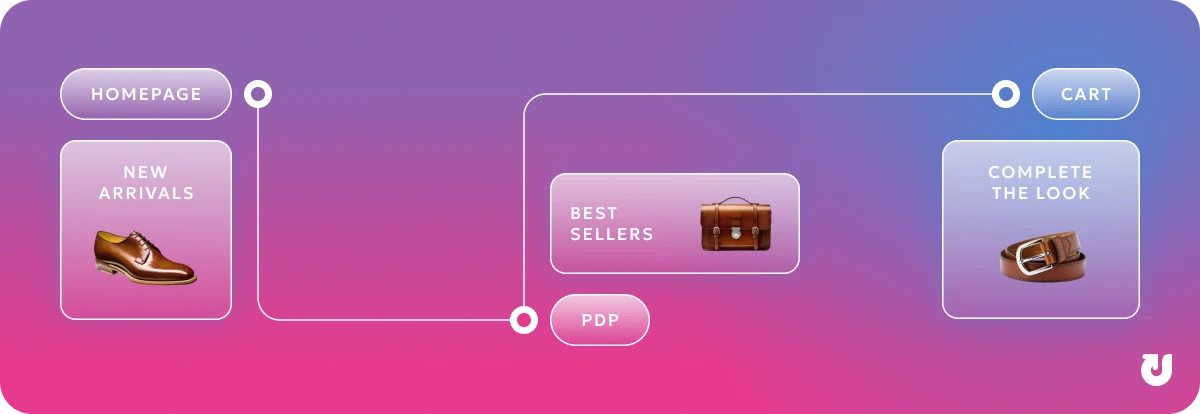
These recommendations can appear across the ecommerce journey, including product pages, category pages, cart pages, search results, post-purchase experiences, and reorder flows.
Some recommendations are based on simple rules, while others use shopper behavior, product data, AI, or a mix of approaches.
When used well, ecommerce product recommendations make it easier for shoppers to discover, compare, and choose products without having to search through the entire catalog on their own.
TL;DR
- Product recommendations are suggestions that help shoppers find relevant products as they browse, compare, and buy.
- Recommendations can be simple, rule-based, preference-based, AI-driven, or a hybrid of multiple approaches.
- Common examples include related products, frequently bought together items, cross-sells, upsells, replenishment reminders, bundles, and recently viewed products.
- Product recommendations can appear on product pages, category pages, cart pages, search results, post-purchase flows, account areas, and guided selling experiences.
- The best ecommerce product recommendation strategies match recommendations to shopper intent, product relationships, placement, inventory, and catalog changes.
- Performance should be measured by recommendation engagement, product interaction, add-to-cart behavior, recommendation relevance, repeat purchase behavior, and incremental lift.
What Are Product Recommendations?
Product recommendations are suggestions shown to ecommerce shoppers to help them find products that are relevant to their interests, needs, or shopping context.
They may be based on:
- product views
- browsing history
- category interest
- cart activity
- purchase history
- product relationships
- similar shopper behavior
- catalog data
- inventory or availability
- declared preferences
For example:
- A shopper viewing running shoes may see socks, apparel, or similar shoe styles.
- A shopper viewing a camera may see a memory card, lens, tripod, or case.
- A shopper viewing a skincare product may see a routine bundle or replenishment item.
- A shopper buying pet food may see treats, toys, or a reorder reminder.
These suggestions help shoppers continue product discovery without having to restart their search or browse the full catalog manually.
Product Recommendations vs. AI Product Recommendations
Product recommendations are the product suggestions shoppers see in an ecommerce experience.
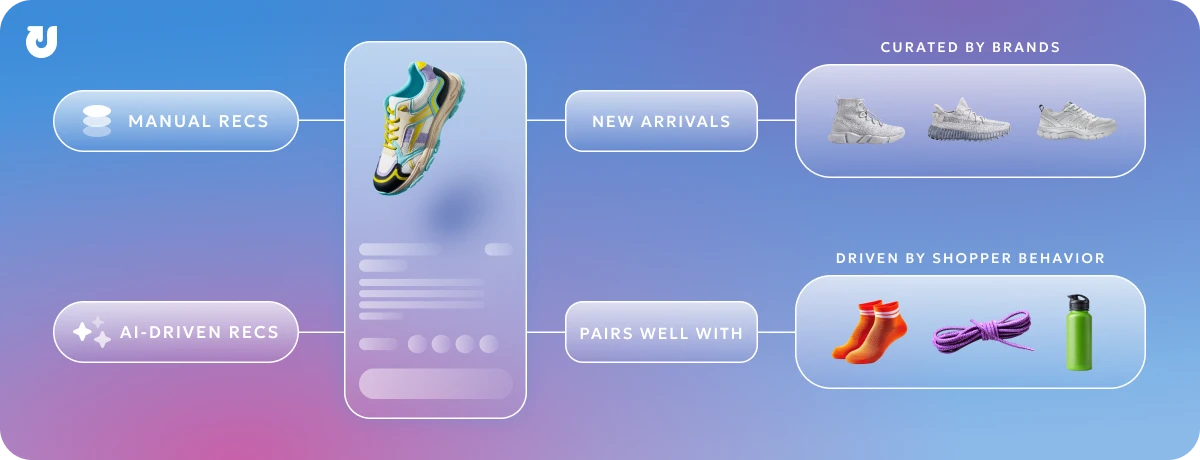
AI product recommendations are one way to decide which products should be shown, but not every product recommendation is powered by AI. For example, an ecommerce brand can manually choose products for a “Complete the Look” section or use a rule to show memory cards when someone views a camera. These are all product recommendations, but they do not necessarily require AI.
AI product recommendations use models that analyze shopper behavior, product data, and patterns across shoppers or products to decide which recommendations to show. For example, an AI-driven system might learn that shoppers who view a certain pair of running shoes often compare a specific sock pack, apparel item, or upgraded shoe style.
This distinction matters because useful recommendations do not always require AI.
Rules may work better when compatibility, inventory, seasonality, or merchandising priorities need tighter control. Others may benefit from AI when there is enough product and behavior data to identify patterns that would be hard to manage manually.
Many ecommerce brands use a hybrid approach: rules and merchandising logic provide control, while AI helps adapt recommendations based on shopper behavior and product patterns.
|
Recommendation Approach |
How It Works |
Ecommerce Example |
Best Used When |
|
Manual or merchandising-led recommendations |
Products are selected by a merchandising or ecommerce team |
A “New Arrivals” or “Complete the Look” module curated by the brand |
The brand wants full control over what appears |
|
Rule-based recommendations |
Products are shown based on predefined logic |
If a shopper views a camera, show compatible memory cards or cases |
Product relationships are predictable or compatibility matters |
|
Preference-based recommendations |
Products are recommended based on declared shopper inputs |
A skincare quiz recommends products based on skin type or concern |
Product fit depends on shopper needs or preferences |
|
AI-driven recommendations |
Models use shopper behavior and product data to adapt suggestions |
Recommend products based on what similar shoppers viewed, compared, or bought |
The catalog is large and there is enough behavior data to identify patterns |
|
Hybrid recommendations |
Combines rules, merchandising logic, product data, and AI |
Use AI to identify relevant products, then apply inventory or category rules |
The brand wants personalization while maintaining control |
Why Product Recommendations Matter
Product recommendations matter because they help ecommerce shoppers find relevant products faster.
At their best, recommendations reduce product discovery friction. They help shoppers compare options, find compatible add-ons, return to products they already considered, and discover items they may not have found through navigation alone.
Large catalogs can make it difficult for shoppers to know what to view next. Recommendations give shoppers a clear path forward by surfacing similar products, compatible items, replenishment products, or alternatives that better fit their needs.
They also help shoppers compare options without restarting their search. For example, a shopper viewing a skincare product may see compatible routine items, while a shopper browsing electronics may see accessories, upgraded versions, or related products.
This matters because product-finding issues can contribute to ecommerce abandonment. Baymard Institute’s ecommerce UX research has found that product discovery and list/navigation usability affect whether shoppers can find suitable products, and poor product-finding experiences can cause users to abandon ecommerce sites.
Product recommendations are also valuable for ecommerce businesses. By making product discovery more relevant, recommendations can improve the customer experience and help shoppers move through the buying journey with less friction.
When recommendations surface useful add-ons, bundles, upgrades, or complementary products, they can also support higher average order value. The key is relevance: recommendations should feel helpful to the shopper, not like unrelated products added to the page.
For returning customers, personalized product recommendations can make the shopping experience more useful by surfacing recently viewed products, replenishment items, new arrivals, related collections, or alternatives based on previous engagement.
How Product Recommendations Work
Ecommerce product recommendations usually follow four basic steps:
Signal → Match → Display → Optimize
First, the recommendation system looks at shopper and product signals. Then, it matches those signals to relevant products. Next, it displays the recommendations in the right ecommerce placement. Over time, the recommendations are tested and refined to improve relevance.
1. Signal
The first step is identifying the signals that show what a shopper may be interested in.
These signals can come from shopper behavior, product data, catalog structure or purchase history. They help determine which products may be most relevant at a specific point in the shopping journey.
|
Signal |
What It Indicates |
How It Can Inform Recommendations |
|
Homepage visit |
Early-stage browsing |
Show trending, seasonal, or popular products |
|
Category browsing |
Interest in a product group |
Recommend category-relevant products |
|
Product view |
Interest in a specific item |
Show similar, related or complementary products |
|
Site search |
Specific shopper intent |
Recommend products that match the search query |
|
Cart activity |
Active product consideration |
Recommend compatible products, accessories or bundles |
|
Past purchase |
Known customer preference |
Recommend replenishment items, accessories or next-best products |
|
Recently viewed products |
Existing interest |
Help shoppers return to previously considered products |
|
Product attributes |
Shared product traits |
Recommend items with similar features, style, size, ingredients or use cases |
|
Availability |
Whether a product can be purchased |
Recommend in-stock alternatives or back-in-stock items |
2. Match
After signals are identified, products are matched based on relevance.
Matching may use product similarity, compatibility, shared attributes, product relationships, product affinity, or shopper behavior. For example, a shopper viewing running shoes may be matched with similar shoe styles, socks, apparel, or higher-support alternatives.
Different ecommerce recommendation strategies use different types of matching. For example:
- A rule-based recommendation may show accessories for a specific product.
- A preference-based recommendation may use quiz answers to match shoppers with products.
- An AI-driven recommendation may use behavior patterns to suggest products that similar shoppers viewed, compared, or bought.
3. Display
Once products have been matched, the next step is determining where those recommendations appear within the ecommerce experience.
Product recommendation placement matters because different ecommerce placements support different shopper needs.
Some placements help shoppers compare options, while others help them find accessories, replenish products, or continue discovery after purchase.
|
Placement |
Recommendation Goal |
Example |
|
Homepage |
Introduce relevant products early |
Trending products, best sellers, or personalized picks |
|
Category page |
Help shoppers narrow choices |
Popular products within the category |
|
Product detail page |
Help shoppers compare or expand options |
Related products, similar items, or complementary products |
|
Cart page |
Suggest relevant additions or alternatives |
Accessories, bundles, or compatible products |
|
Search results page |
Support product discovery from search intent |
Products related to the shopper’s query |
|
Post-purchase experience |
Continue product discovery after purchase |
Refills, accessories, complementary products, or next-best products |
|
Account or reorder area |
Support returning shoppers |
Replenishment items or previously purchased products |
|
Product quiz or guided selling flow |
Match products to declared preferences |
Products based on needs, goals, size, style, or preferences |
4. Optimize
Product recommendations should improve over time.
Optimization means reviewing how shoppers interact with recommendations and adjusting the strategy based on performance.
This may include testing where recommendations appear, which products are shown, how many products are included, and whether the recommendation logic is producing relevant results.
Common optimization steps include:
- testing recommendation placement
- adjusting which products are recommended
- refining rule-based or AI-driven logic
- updating product relationships
- excluding unavailable or discontinued products
- refreshing recommendations for seasonality or catalog changes
- improving product data quality
- reviewing performance by placement, product category, and shopper segment
The goal is to make recommendations more relevant, useful, and aligned with how shoppers move through the ecommerce journey.
The next sections cover the types of product recommendations brands can use and the best practices that help keep those recommendations relevant.
Types of Product Recommendations
Product recommendations can support many different stages of the shopper journey, from early product discovery to post-purchase engagement and replenishment.
|
Category |
Recommendation Types |
Primary Goal |
|
Discovery Recommendations |
Trending Products, Best Sellers, New Arrivals, Customers Also Viewed |
Help shoppers explore products and discover items they may not have found through navigation or search alone. |
|
Comparison Recommendations |
Related Products, Similar Products, Upsells, Downsells |
Help shoppers evaluate alternatives, compare options, and find products that better match their needs or budget. |
|
Cart-Building Recommendations |
Frequently Bought Together, Bundles, Cross-Sells |
Increase basket size by suggesting complementary products that enhance or complete the purchase. |
|
Retention Recommendations |
Replenishment Recommendations, Recently Viewed Products, Post-Purchase Recommendations |
Encourage repeat purchases, simplify reordering, and maintain engagement after the initial sale. |
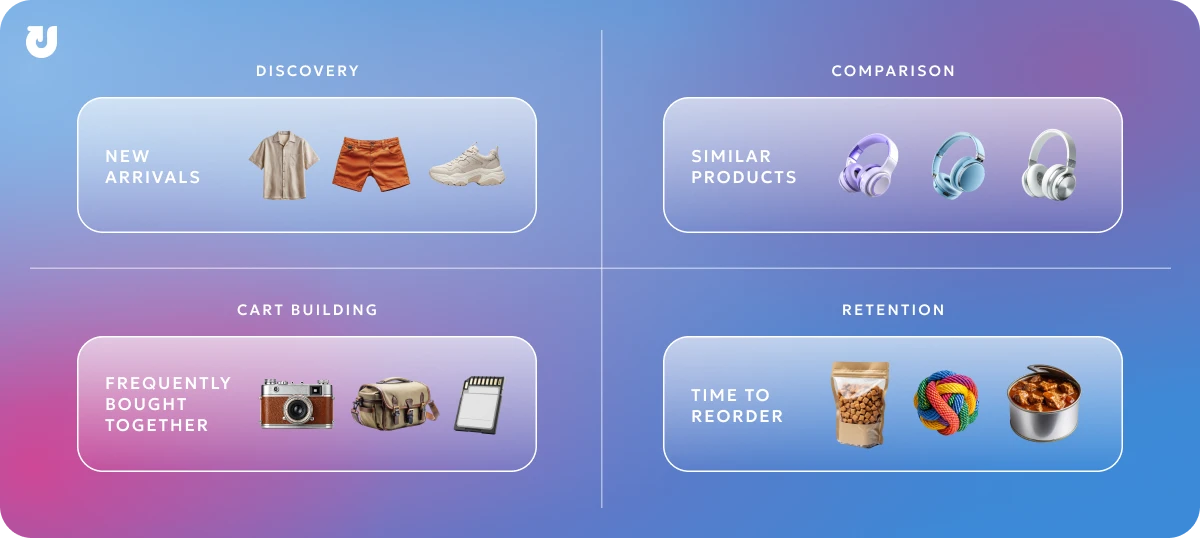
Many ecommerce brands use more than one type of product recommendation at the same time.
For example, a product page may show:
- Related products for comparison
- Cross-sell recommendations for compatibility
- Upsell recommendations for upgraded options
- Replenishment recommendations for repeat purchases
The right mix depends on the product category, catalog size, shopper intent, available product data, and where the recommendation appears in the ecommerce journey.
Product Recommendation Strategy and Best Practices
A strong product recommendation strategy starts with shopper intent. Each recommendation should support what the shopper is trying to do at that moment, whether they are browsing a category, comparing products, building a cart, or returning to reorder.
1. Match Recommendations to Shopper Intent
Product recommendations should reflect the shopper’s current behavior and stage in the journey.
For example, a shopper browsing a category may need help narrowing their options. A shopper viewing a product may be ready to compare similar items or consider complementary products. A returning customer may be more interested in replenishment, recently viewed products, or items related to a previous purchase.
Common examples include:
- category browsing → popular products in that category
- product view → similar, related, or complementary products
- cart activity → compatible accessories, bundles, or add-ons
- past purchase → replenishment items, upgrades, or related products
- quiz response → products matched to declared preferences
2. Use Product Relationships Strategically
Product recommendations are stronger when they are based on clear product relationships.
These relationships may include similarity, compatibility, shared attributes, product affinity, frequently bought together behavior, bundles, refills, or upgrades.
For example, a camera may connect naturally to memory cards, cases, tripods, lenses, or batteries. A skincare product may connect to a routine, replenishment item, or product for the same skin concern.
Clear product relationships help recommendations feel helpful instead of random.
3. Keep Recommendations Relevant and Focused
Product recommendations should make product discovery easier, not more overwhelming.
Avoid showing too many recommendation modules on the same page, repeating the same products across placements, or surfacing products that do not match the shopper’s current context.
A focused set of relevant recommendations is usually more useful than a large carousel of loosely related products.
4. Balance Automation With Merchandising Control
Automation can help ecommerce brands scale product recommendations, but merchandising control is still important.
Recommendations should account for inventory, product availability, category priorities, seasonality, exclusions, compatibility, and brand goals.
For example, a brand may want to exclude out-of-stock products, prioritize seasonal items, prevent incompatible products from being recommended together, or control which products appear in high-visibility placements.
5. Test Recommendation Placement and Format
Where and how recommendations appear can affect whether shoppers engage with them.
Brands should test different placements, product counts, layouts, messaging, and recommendation types. For example, a product page carousel may perform differently from a cart page bundle recommendation or a post-purchase replenishment suggestion.
Useful elements to test include:
- placement
- number of products shown
- product order
- carousel vs. static layout
- module headline or copy
- product imagery
- audience segment
- recommendation type
6. Refresh Recommendations as Catalogs Change
Product recommendations should evolve as the catalog changes.
New products, discontinued products, seasonal shifts, pricing changes, and inventory updates can all affect which products should be recommended.
If recommendation logic is not refreshed, shoppers may see outdated, unavailable, or less relevant products.
7. Use Clear Product Data
Accurate product data helps recommendation engines make better matches.
Important product data may include categories, attributes, pricing, inventory, compatibility details, product variants, replenishment timing, and product relationships.
The clearer the product data, the easier it is to surface recommendations that match shopper intent and product context.
How to Measure Product Recommendation Performance
Measuring product recommendation performance helps brands understand whether their recommendations are actually helping shoppers discover, compare and choose products.
Because recommendations can appear in different places, performance should be measured by placement. A product page recommendation may be designed to support comparison, while a cart recommendation may be designed to suggest compatible add-ons. A post-purchase recommendation may be focused on replenishment or repeat discovery.
The right metrics depend on the goal of the recommendation.
|
Metric |
What It Measures |
|
Recommendation click-through rate |
Whether shoppers engage with recommended products |
|
Product interaction rate |
Whether shoppers view, compare, or explore recommended items |
|
Add-to-cart rate |
Whether recommendations are added to the cart |
|
Attach rate |
How often recommended products are added or purchased alongside another product |
|
Conversion rate |
Whether shoppers who engage with recommendations complete a purchase |
|
Repeat purchase rate |
Whether recommendations support returning purchases |
|
Replenishment engagement |
Whether shoppers respond to reorder or refill suggestions |
|
Product coverage |
How much of the catalog is eligible for recommendations |
|
Recommendation relevance |
Whether recommended products align with shopper intent |
|
Incremental lift |
Performance difference compared to a control group |
How to Evaluate Product Recommendation ROI
Product recommendation ROI should be measured with testing whenever possible.
It is not enough to look at total revenue from recommended products, because some shoppers may have purchased those products anyway. A/B tests, control groups, or holdout tests can help ecommerce teams understand whether recommendations actually changed shopper behavior.
For example, one group of shoppers may see product recommendations while another similar group does not. If the group that sees recommendations has higher engagement, add-to-cart activity, attach rate, repeat purchase behavior, or revenue per visitor, the difference can help show incremental lift.
Brands should review results by:
- recommendation placement
- recommendation type
- product category
- shopper segment
- device type
- new vs. returning customers
This helps identify which recommendation experiences are useful and which ones need to be refined.
The goal is not just to prove that recommendations were clicked. The goal is to understand whether they helped shoppers take a more relevant next step in the ecommerce journey.
Common Product Recommendation Challenges
Product recommendations are only useful when they are relevant, accurate, and aligned with the shopper’s context.
As catalogs grow and shopper behavior changes, ecommerce brands need to manage the data, logic, inventory, and testing behind their recommendations. Otherwise, recommendations can become irrelevant, repetitive, unavailable, or difficult to measure.
Data Quality
Product recommendation relevance depends heavily on accurate and well-structured product data.
If product attributes, categories, compatibility details, pricing, or inventory feeds are incomplete, the recommendation engine may surface products that do not make sense for the shopper.
For example, a skincare brand may need ingredients, skin type, routine, and replenishment data. An electronics brand may need compatibility information for accessories, replacement parts, and upgraded models.
Cold-Start Problems
A cold-start problem happens when there is not enough data to make strong recommendations.
This can happen with new shoppers, new products, new categories, or low-traffic catalogs. Without enough behavior data, AI-driven or behavior-based recommendations may have fewer signals to work with.
In these cases, ecommerce brands can use rule-based recommendations, category best sellers, product attributes, merchandising logic, quiz responses, or manually curated recommendations until more data is available.
Irrelevant Recommendations
Recommendations can lose value when they do not match the shopper’s intent or product context.
For example, showing unrelated accessories, incompatible products, unavailable items, or the same products repeatedly can make recommendations feel unhelpful.
Brands can improve relevance by refining product relationships, using stronger product data, testing recommendation logic, and aligning recommendations with the shopper’s current behavior.
Too Many Recommendations
Too many recommendations can create clutter and make product discovery harder.
If a product page, category page, or cart experience has too many recommendation modules, shoppers may have a harder time focusing on the products that matter most.
A smaller set of relevant recommendations is usually more helpful than a large carousel of loosely related products.
Inventory and Availability Issues
Recommendations should reflect what shoppers can actually buy.
Out-of-stock, discontinued, or unavailable products can create dead ends in the shopping experience. This is especially frustrating when a shopper clicks a recommended product and cannot purchase it.
Inventory-aware recommendation logic can help suppress unavailable products, recommend in-stock alternatives, or surface back-in-stock items when relevant.
Complexity
Large ecommerce catalogs can make product recommendations harder to manage.
Different product categories may need different recommendation rules. Apparel may require size, color, style, and seasonality logic. Electronics may require compatibility logic. Supplements, skincare, and pet products may require replenishment, routine, or preference-based logic.
As catalogs become more complex, brands may need stronger product attributes, clearer category structures, and more specific merchandising controls.
Privacy and Data Limitations
Product recommendations rely on shopper and product data, but privacy regulations, browser restrictions, ad blockers, and consent requirements can limit how much behavioral data is available for personalization.
This can make it harder to identify returning shoppers, track behavior across sessions, or personalize recommendations for anonymous visitors and first-time shoppers.
As privacy standards evolve, ecommerce brands need recommendation strategies that balance personalization with shopper trust. Many brands address this by combining behavioral data with broader recommendation signals like product relationships, category popularity, inventory data, merchandising rules, and declared shopper preferences.
Measurement Difficulty
It can be difficult to know whether product recommendations actually influenced shopper behavior.
A shopper may have purchased a recommended product because of the recommendation, or they may have purchased it anyway. That is why A/B testing, control groups, holdout tests, and incremental lift analysis are important.
Brands should look beyond clicks alone and review whether recommendations support product interaction, add-to-cart behavior, attach rate, repeat purchases, replenishment engagement, and other meaningful actions in the shopping journey.
Real Examples of Ecommerce Product Recommendations
Product recommendation strategies vary by industry based on shopper behavior, product relationships, catalog complexity, replenishment cycles, and purchase intent. Below are examples of how different industries use product recommendations to improve product discovery, surface relevant products, and support more connected customer journeys.
Recommending Alternative Products for Out-of-Stock Items
When shoppers landed on a discontinued or out-of-stock supplement product page, AI-powered recommendations surfaced relevant alternatives based on product attributes and shopper behavior. This helped shoppers continue their purchase journey instead of leaving the site when their preferred product was unavailable.
Result: 27% click rate.
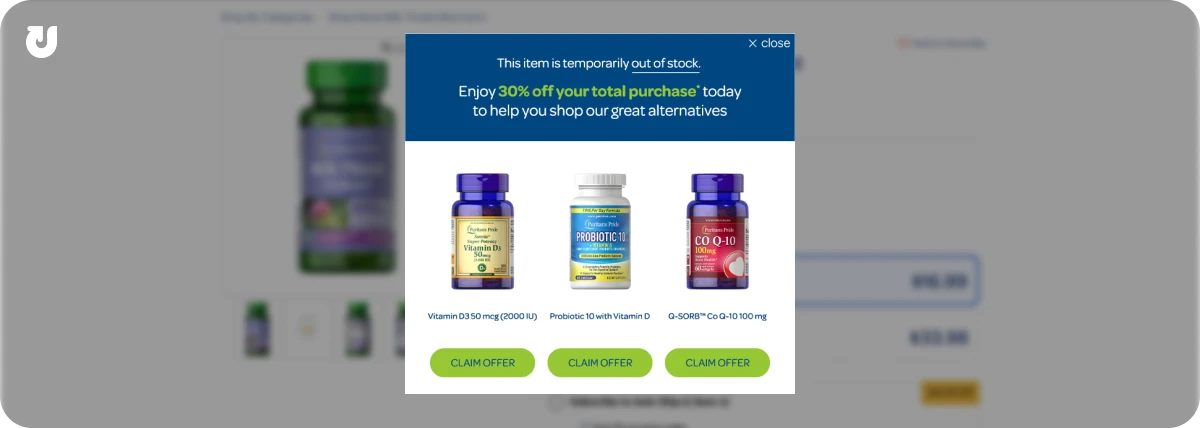
Source: Supplements and Nutrition Case Study
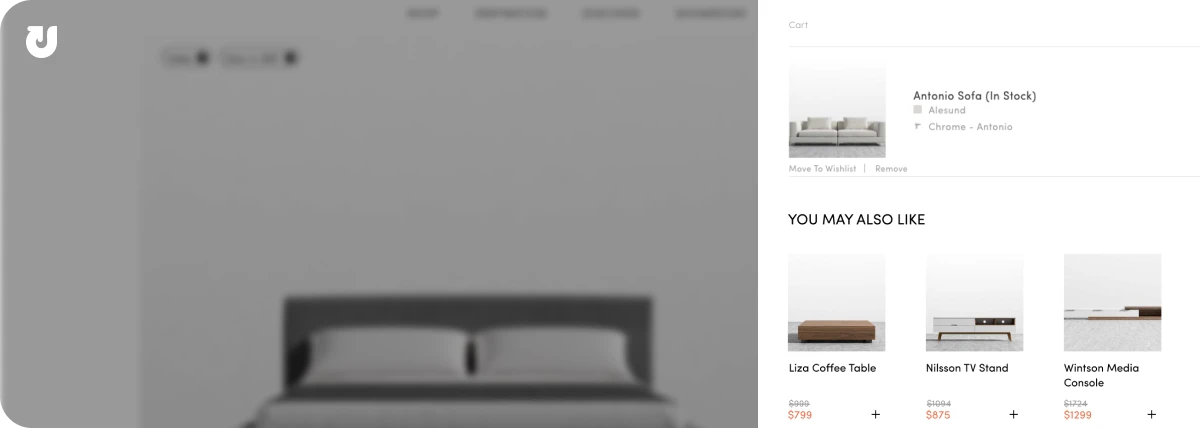
Adding Value with “Complete the Look” Recommendations
A luxury brand used in-page “Complete the Look” recommendations to surface complementary products aligned with shopper intent. These in-page reinforcements showcased relevant items from current collections without interrupting the shopping journey, helping maintain a seamless path to purchase.
Result: 7% revenue lift.
(Source: Luxury Case Study)
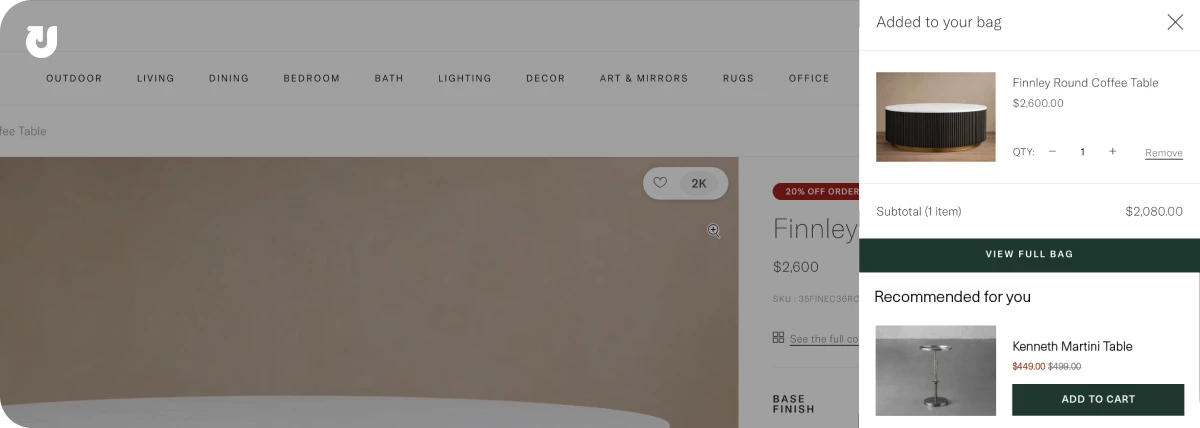
Increasing Average Order Value with MiniCart Recommendations
A home decor brand used MiniCart recommendations to highlight accent decor and complementary products alongside active cart contents. Because the recommendations followed shoppers throughout their session, customers could easily discover additional items that matched their selections without leaving the page.
Result: 27% of shoppers purchased a recommended item.
Source: Home Decor Case Study
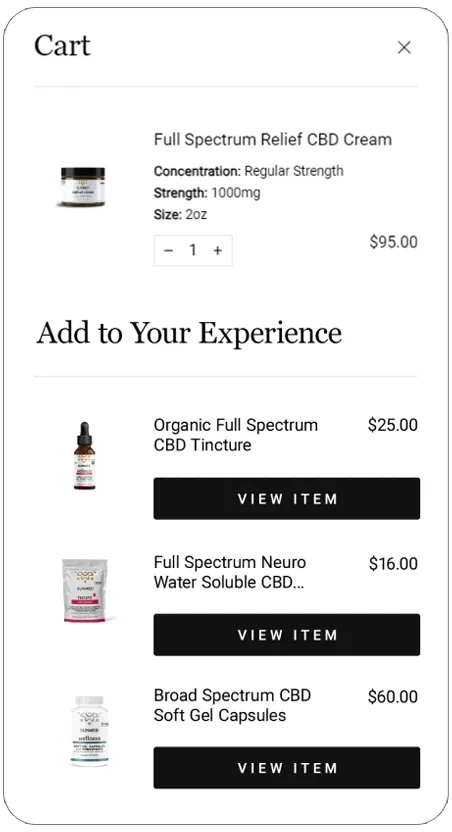
Suggesting Compatible Bundles for CBD Purchases
A CBD retailer used compatibility-based recommendations to suggest frequently bought together products that worked with items shoppers were considering. These recommendations were integrated into the minicart immediately after a shopper added a product to their basket, simplifying access to bundles and minimizing friction in the decision-making process.
Result: 5% of shoppers purchased more.
(Source: CBD Case Study)
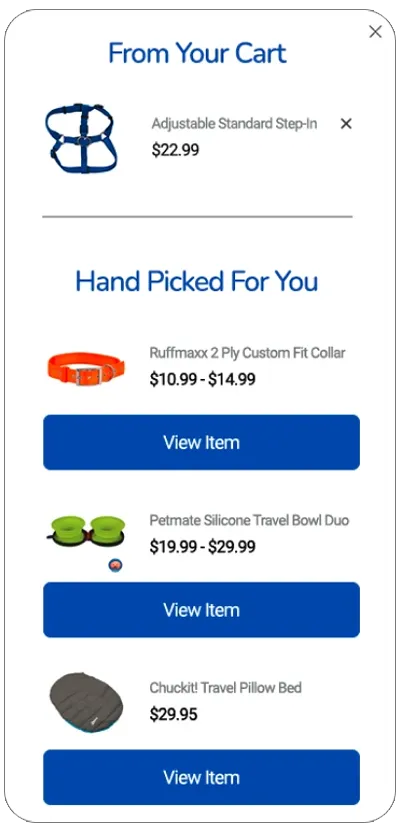
Encouraging Repeat Purchases with Complementary Recommendations
A pet products retailer used dynamic recommendations based on previous purchases, pet characteristics, and shopping behavior to surface complementary items. Recommendations encouraged shoppers to add additional products to their orders.
Result: 4% of shoppers added additional products to their purchase.
Source: Pet Products Case Study
When to Work With a Product Recommendation Partner
Many ecommerce brands can start with simple product recommendations, such as related products, best sellers, or manually curated bundles.
But as catalogs grow and more shoppers expect personalized ecommerce experiences, it can become harder to manage relevant product recommendations manually.
Brands may need to account for shopper behavior, product relationships, inventory, category differences, seasonality, and ongoing testing across multiple recommendation placements.
A product recommendation partner may be helpful when:
- the catalog is large or changes frequently
- product relationships are complex
- recommendations need to account for inventory, availability, or discontinued products
- different categories require different recommendation strategies
- the brand wants to use rule-based, AI-driven, preference-based, or hybrid recommendation logic
- internal teams do not have time to manage ongoing testing and optimization
- recommendations feel repetitive, irrelevant, or difficult to control
- product page, cart, post-purchase, or reorder placements need a clearer strategy
- the team needs better ways to measure recommendation performance or incremental lift
Many brands also use product recommendation partners to support more personalized shopping experiences.
Partners like Upsellit can help ecommerce brands move beyond basic recommendation rules by using machine learning to build and continuously update associations between products.
Upsellit programs and calibrates recommendation algorithms around specific business objectives, using parameters and weighted shopper events to determine which products should be presented at each point in the customer journey.
This helps brands deliver more personalized, one-to-one product recommendations while still accounting for product relationships, shopper behavior, timing, and performance goals.
Additional Resources on Product Recommendations
If you want to explore product recommendation strategies in more detail, the resources below expand on the ideas covered in this guide.
Blogs
- 4 Reasons Advanced Product Recommendations Mean More Revenue
- 6 Common Upselling Mistakes and How to Avoid Them
Industry-Specific Case Studies
- Leveraging Complementary Product Recommendations in the Fashion Industry
- Recommending Alternative products for Out-of-Stock Items in Supplements and Nutrition Industry
- Pet Products Recommendations Based on Repeat Purchases
- Upsells and Cross-sells Recommendations in Consumer Electronics
- Complete The Look Recommendations With Home & Decor Brands
Successful Strategy Case Studies & Solution Guide
- Increase Average Order Value 29%
- Recommendations Drive $762K In Online Revenue
- Website Experience Case Study
- AI Recommendations Solution Guide
Ecommerce Product Recommendation Frequently Asked Questions
What Are Product Recommendations In Ecommerce?
Product recommendations in ecommerce are product suggestions shown to shoppers based on their behavior, product data, product relationships, and shopping context. Common examples include related products, frequently bought together items, cross-sells, upsells, replenishment reminders, and personalized recommendations.
How Do Ecommerce Product Recommendations Work?
Ecommerce product recommendations use shopper and product signals to determine which products to show. These signals may include product views, category browsing, site search, cart activity, purchase history, product attributes, inventory availability, and declared shopper preferences.
What Are Examples of Product Recommendations?
Examples of product recommendations include related products, frequently bought together items, customers also viewed, customers also bought, cross-sells, upsells, recently viewed products, replenishment reminders, product bundles, and personalized product recommendations.
What Is the Difference between Product Recommendations and AI Product Recommendations?
Product recommendations are the suggestions shoppers see in an ecommerce experience. AI product recommendations are one way to decide which products to show, using models that analyze shopper behavior, product data, and product relationships.
Do Product Recommendations Require AI?
No. Product recommendations can be manual, rule-based, preference-based, AI-driven, or hybrid. Many ecommerce brands use a mix of approaches depending on catalog size, product relationships, available data, merchandising needs, and recommendation goals.
What Is a Product Recommendation Engine?
A product recommendation engine is the system that selects, ranks, and displays recommended products across ecommerce experiences. It may use shopper behavior, product data, product relationships, inventory, merchandising rules, AI, or hybrid logic to determine which products to show.
Where Should Product Recommendations Appear on an Ecommerce Site?
Product recommendations can appear on homepages, category pages, product detail pages, search results pages, cart pages, post-purchase flows, account or reorder areas, emails, and guided selling experiences. The best placement depends on the shopper’s context and the goal of the recommendation.
How Do Personalized Product Recommendations Work?
Personalized product recommendations use shopper behavior, preferences, purchase history, quiz responses, or real-time shopping context to suggest relevant products. For example, a returning shopper may see recently viewed items, replenishment products, or recommendations based on previous purchases.
What Data Is Used for Product Recommendations?
Product recommendations may use product views, browsing history, category interest, site search, cart activity, purchase history, product attributes, catalog data, inventory availability, product relationships, and declared shopper preferences.
How Can Ecommerce Brands Improve Product Recommendation Relevance?
Ecommerce brands can improve recommendation relevance by using accurate product data, mapping clear product relationships, matching recommendations to shopper intent, excluding unavailable products, testing placements, and refining recommendation logic over time.
How Do You Measure Product Recommendation Performance?
Product recommendation performance can be measured using recommendation click-through rate, product interaction rate, add-to-cart rate, attach rate, conversion rate, repeat purchase rate, replenishment engagement, recommendation relevance, and incremental lift.
What Is Incremental Lift in Product Recommendations?
Incremental lift is the difference in performance between shoppers who saw product recommendations and a comparable control group that did not. It helps ecommerce brands understand whether recommendations actually influenced shopper behavior.
When Should Ecommerce Brands Work with a Product Recommendation Partner?
Ecommerce brands may benefit from a product recommendation partner when their catalog is large, product relationships are complex, recommendations need to adapt to inventory or shopper behavior, or internal teams do not have time to manage ongoing testing and optimization manually. A partner can help structure recommendation logic, personalize experiences, and measure performance over time.