

Most shoppers who add items to their cart never complete their purchase, but in many cases, small improvements can make a big impact.
From simplifying checkout to offering the right incentives at the right moment, reducing cart abandonment often comes down to removing friction and making it easier for shoppers to follow through.
The following strategies are simple, practical ways that have been thoroughly tested and proven by Upsellit to reduce cart abandonment and improve conversion rates.
How to Reduce Cart Abandonment: 7 Proven Strategies
To reduce cart abandonment, focus on improving key parts of the shopping experience, like making product pages easy to understand and keeping the checkout process simple.
The following cart abandonment solutions are designed to address common drop-off points and help you keep shoppers moving toward checkout.
- 1. Optimize Your Product Pages
- 2. Let Shoppers Edit Their Cart
- 3. Offer to Save Carts for Later
- 4. Offer Guest Checkout
- 5. Make Checkout Easier to Complete
- 6. Offer More Payment Options
- 7. Offer Free Shipping (or Incentivize It)
1. Optimize Your Product Pages
Product pages are often where shoppers decide whether to move forward or move on.
At this stage, shoppers are comparing options, reviewing details, and deciding if the product is right for them. When key details are missing or hard to find, shoppers are more likely to leave to compare options elsewhere, sometimes without returning.
Making product information clear and easy to scan helps shoppers quickly evaluate their options and move forward with confidence.
Here are three simple ways you can optimize your product pages to reduce cart abandonment:
Keep Text Short and Clear
Product descriptions should be easy to scan and focused on the details shoppers actually need to make a decision. Including key product details, like size, dimensions, materials, and shipping information, can make it easier for shoppers to quickly understand the product and reduce uncertainty.
Focus on High-Quality Images
Product images should show an item clearly and from multiple angles so shoppers know exactly what to expect. Providing enough visual detail reduces guesswork and helps shoppers feel as confident purchasing online as they would in a physical store.
Use Social Proof
Customer reviews are one of the most effective ways to build trust and help shoppers feel confident in their decision. In fact, studies show that up to 98% of consumers read reviews before making a purchase.
Reviews help shoppers understand how a product performs in real-world use, answer common questions, and validate that others have had a positive experience.
2. Let Shoppers Edit Their Cart
Allowing shoppers to easily update their cart reduces frustration by eliminating the need to start over when trying to make changes.
Many shoppers use their cart as a place to compare options. If they can’t remove or adjust items easily, it can disrupt the experience.
For example, imagine you’re shopping for a coffee table. You find three options you like and add them to your cart to compare. After deciding on one table, you’re ready to checkout, only to realize you can’t remove the other two.
While this might seem like a small issue, it can quickly become frustrating. If fixing the cart requires starting over, many shoppers will abandon the purchase altogether and decide they don’t really need a new coffee table after all.
Even minor limitations like this can interrupt the buying process, so giving shoppers control over their cart helps the experience feel more seamless and flexible.
3. Offer to Save Carts for Later
One of the most common reasons shoppers abandon their carts is simply because they’re not ready to buy yet. Many are still browsing, comparing options, or planning to return later.
This is especially true on mobile, where distractions are common and shoppers may not have their payment information readily available.
One simple way to address this is by allowing shoppers to save their cart for later. You can ask for an email address to send them a reminder with their saved items, allowing them to easily come back and pick up where they left off.
This strategy gives shoppers the flexibility to complete their purchase on their own time and from any device, while also creating an opportunity for you to grow your email list and re-engage interested shoppers.
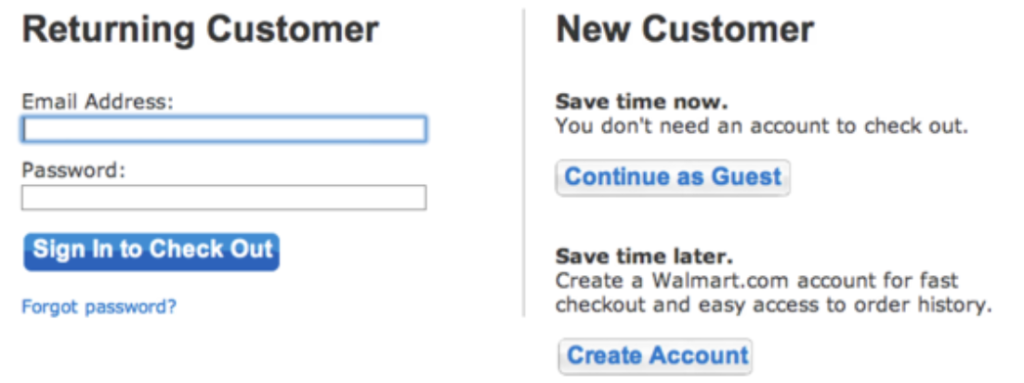
4. Offer Guest Checkout
When a shopper places an order, it’s natural to want to collect as much information as possible. However, requiring too much information upfront can slow down the checkout process. 19% of shoppers will even abandon their carts if they’re forced to create an account just to make a purchase.
For many shoppers, especially on mobile devices, being asked to create an account feels like an extra step they don’t want to take at that moment. If checkout feels too time-consuming or complicated, they may leave altogether.
Offering a guest checkout option allows shoppers to complete their purchase quickly, while still giving you the information needed to fulfill the order. After the purchase, you can invite shoppers to create an account if they choose.
5. Make Checkout Easier to Complete
Once a shopper moves from cart to checkout, even small points of friction can cause them to drop off before completing their purchase.
At this stage, the goal isn’t to optimize every part of checkout, it’s to remove just enough friction to help committed shoppers follow through.
One-Page Checkout
Consolidating checkout into a single page allows shoppers to complete their purchase without navigating through multiple steps.
You can also remove unnecessary fields that slow shoppers down during the checkout. For example, do you really need a shopper’s phone number to complete their order? Removing unnecessary fields helps streamline the process and keeps shoppers focused on completing their purchase.
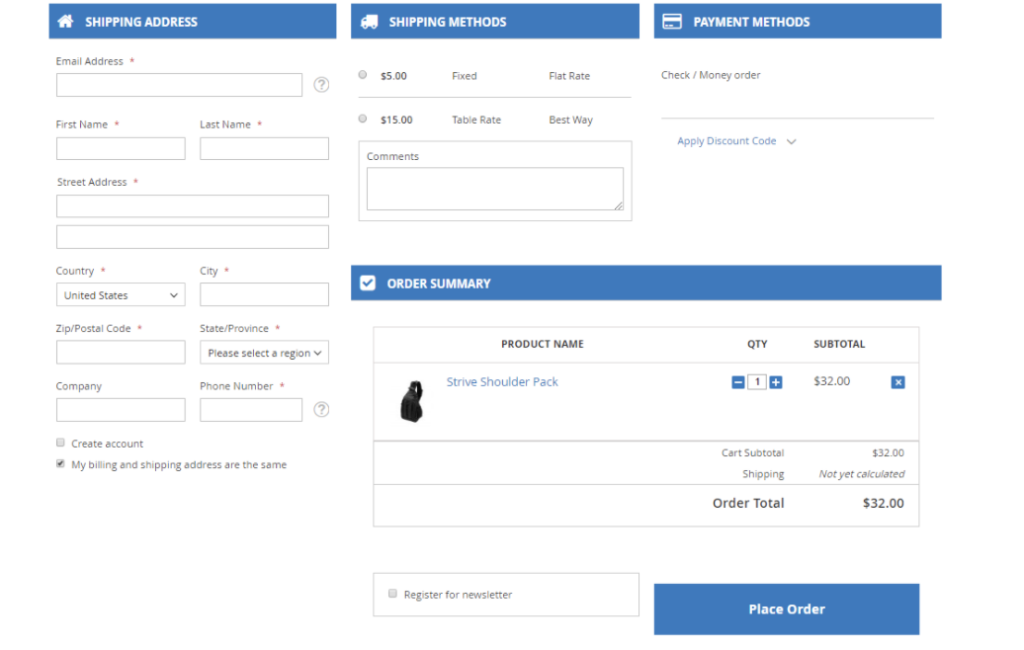
You can also consider saving shoppers’ payment information for faster checkout in the future. These strategies help make checkout feel faster and easier to complete.
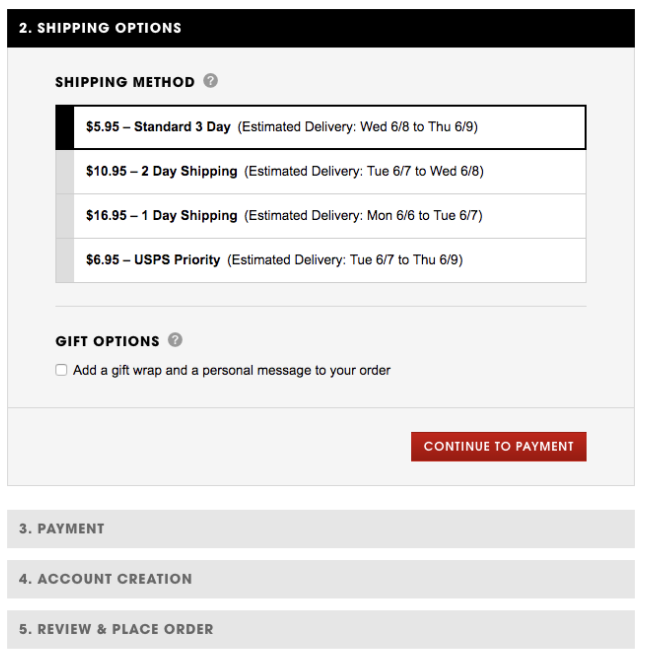
Accordion Checkout
Another popular way to make checkout feel faster and easier is the accordion checkout, where sections expand and collapse as the shopper moves through the process. By breaking the process into smaller sections, accordion checkout can make the purchase experience feel less overwhelming.
6. Offer More Payment Options
Offering multiple payment options makes it easier for shoppers to complete their purchase in a way that feels convenient and comfortable to them.
Not every shopper wants to pay the same way. While many ecommerce transactions happen with a debit or credit card, some shoppers prefer alternatives that feel faster, more flexible, or better aligned with their budget. In some cases, shoppers may also hesitate if they don’t see a payment method they recognize or trust.
Providing additional payment options can help reduce hesitation at checkout, especially for shoppers who are price-sensitive or want more control over how and when they pay.
PayPal and Digital Wallets
Payment options like PayPal allow shoppers to pay for their items without entering their credit card details directly on your site. For some, this adds a layer of convenience and reassurance.
Digital wallets like Apple Pay and Google Pay offer a similar benefit, allowing shoppers to check out quickly using saved payment information. These options can make the checkout process feel faster and more seamless, especially on mobile devices.
Buy Now, Pay Later
Buy now, pay later options like Affirm allow shoppers to buy immediately and split payments over time.
In many cases, these plans offer lower interest rates than traditional credit cards, making them a more approachable option for some buyers.
For higher-priced items, this can also make a purchase feel more manageable and reduce cart abandonment, especially for shoppers who are more price-sensitive.
Some of Upsellit’s clients have seen success by offering Affirm financing at the point of abandonment. This strategy can reduce price sensitivity without relying on additional discounts.
7. Offer Free Shipping (or Incentivize It)
Even though shipping fees are a normal part of shopping online, they remain one of the biggest causes of cart abandonment. In fact, more than 90% of consumers say they are likely to abandon a purchase if they encounter high shipping costs.
The reasons for this are psychological. Shoppers are naturally drawn to the idea of “free.” Even when a discount might offer higher savings, free shipping often feels simpler and more rewarding.
Of course, most brands can’t offer free shipping on every order, so the challenge becomes finding a way to offer it strategically without cutting into margins.
Free Shipping Thresholds
One of the most effective ways to offer free shipping without hurting margins is to set a minimum order threshold. For example, offering free shipping on orders over $50 encourages shoppers to add more items to their cart to qualify.
You can reinforce this strategy with a gamified progress bar that shows shoppers how close they are to unlocking free shipping. This creates a clear goal and makes the incentive feel more achievable.
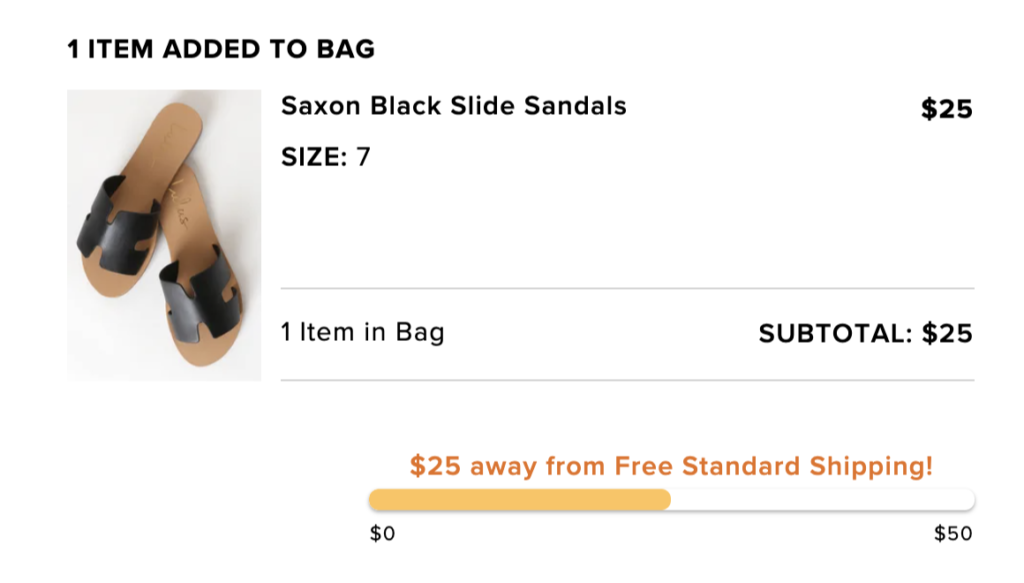
This strategy helps reduce cart abandonment while also increasing average order value by encouraging shoppers to add more items to qualify.
Recover Lost Shoppers with Abandoned Cart Emails
Abandoned cart emails are one of the most effective ways to recover lost sales after a shopper leaves your site.
Even with the best on-site experience, some shoppers will still drop off before checking out. However, since these shoppers have already shown interest, they’re more likely to return with the right follow-up.
Email remarketing is one of the most effective forms of abandoned cart recovery, helping brands reconnect with shoppers and nudge them to come back.
Two common approaches to abandoned cart emails are offering incentives and creating a sense of urgency.
Incentives and Discounts
Incentives give shoppers a clear reason to come back and complete their purchase. Even small offers, like 10% off or a free gift, can be enough to convince a hesitant shopper to make a purchase.
Urgency
Incorporating urgency-focused messaging helps turn hesitation into action by encouraging shoppers to act sooner rather than later. Strategies like showing low stock, limited-time offers, or real-time social proof (such as how many people have recently viewed or purchased an item) can create momentum and make it easier for shoppers to complete their purchase.
Reducing Cart Abandonment Starts with Small Improvements
Cart abandonment isn’t caused by a single issue. It’s the result of small moments throughout the shopping experience that create hesitation or slow shoppers down. Reducing cart abandonment comes down to identifying those moments and removing them wherever possible.
By improving product pages, simplifying checkout, offering flexible payment options, and following up with abandoned cart emails, you can remove barriers and keep shoppers moving toward checkout.
For a deeper understanding of why shoppers abandon and how to identify where drop-off actually happens in your funnel, check out Upsellit’s complete guide to cart and checkout abandonment.