

For ecommerce brands, cart and checkout abandonment is one of the clearest signals that something in the purchase journey needs attention. But knowing where shoppers leave isn’t enough. To improve the buying experience, you need to understand what cart and checkout abandonment actually mean and how ecommerce brands can reduce abandonment through conversion rate optimization (CRO).
So what is cart and checkout abandonment?
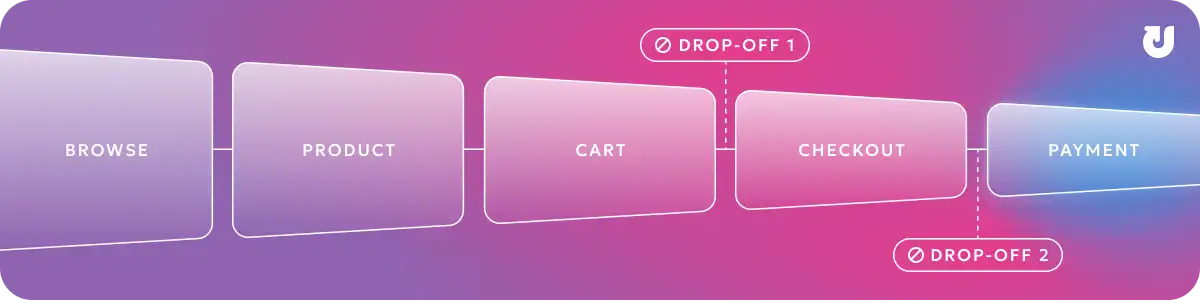
- Cart abandonment happens when a shopper adds items to a cart but leaves the site before starting checkout.
- Checkout abandonment happens when a shopper begins the checkout process but exits before completing payment.
Because abandonment happens at multiple stages of the purchase journey, it affects a significant portion of ecommerce traffic.
The average cart abandonment rate is around 70%. While rates vary by industry, traffic source, and device type, abandonment remains one of the biggest challenges for ecommerce brands.
When shoppers leave without making a purchase, it has a direct impact on business performance. High abandonment rates reduce revenue, lower conversion rates, and increase the cost of acquiring new customers.
Industry research estimates that ecommerce brands lose billions of dollars each year due to abandonment, with some reports citing more than $18 billion in annual lost revenue.
Even though abandonment hurts performance, it also reveals where shoppers are getting stuck. Once you know where people drop off, you can start understanding why it happens and what needs to change.
By the end of this guide, you’ll have a clear framework for identifying cart and checkout abandonment, reducing friction, and improving how shoppers move from browsing to buying.
TL;DR
- Cart and checkout abandonment happen at different stages of the purchase journey, so they require different strategies to address the problems shoppers face at each stage.
- UX factors like page speed, mobile usability, and simple checkout fields directly influence whether shoppers complete a purchase.
- Reducing cart abandonment requires different strategies depending on where shoppers leave and what hesitation they experience during the buying process.
- A single abandonment rate won’t show you where the real problem is. Break it down by funnel stage, device type, and traffic source to see where friction actually occurs.
- Abandonment isn’t a failure. It’s one of the clearest signals that something in the buying experience needs improvement.
What Is Cart and Checkout Abandonment?
Cart and checkout abandonment occur when a shopper leaves a site before making a purchase.
Cart abandonment typically occurs earlier in the buying journey when shoppers are comparing or researching options, while checkout abandonment happens later when a shopper is close to completing payment.
Abandonment is a normal part of how people shop online and does not mean that a shopper never intended to buy.
In many cases, shoppers use the cart and checkout as tools for comparison and decision-making.
The cart often functions as a place for shoppers to narrow their options before committing. Within the cart, shoppers commonly:
- Compare product prices
- Evaluate features or variants
- Adjust item quantities
- Save items for later
At this stage, the shopper mindset is exploratory. Shoppers are browsing, comparing, and weighing options rather than preparing to complete a transaction.
At checkout, the behavior shifts. Shoppers are no longer comparing products and are instead validating the purchase. During checkout, shoppers typically:
- Review the final order total
- Confirm delivery timelines
- Evaluate return and exchange policies
- Select and validate payment options
Entering checkout shows stronger purchase intent, but commitment is not guaranteed. A shopper can still pause if something creates friction or doubt.
When a shopper abandons a purchase, something in that moment interrupts the buying process. Confusing navigation, unexpected costs, or real-world distractions can all cause shoppers to pause or drop off before finalizing a purchase.
Because shoppers leave for different reasons at different stages of the journey, brands should analyze cart and checkout abandonment separately. Evaluating these stages individually helps pinpoint where shoppers are exiting and which optimizations will have the greatest impact.
Recognizing these differences naturally leads to the next question: what specific factors cause shoppers to leave?
What Causes Cart and Checkout Abandonment?
Cart and checkout abandonment happen for many reasons, including unexpected costs, complicated checkout processes, and poor mobile usability.
Because multiple factors influence shopper behavior, the reasons that someone leaves their cart isn’t always the same as what makes them leave during checkout.
Factors That Influence Abandonment Across the Customer Journey
Device Type
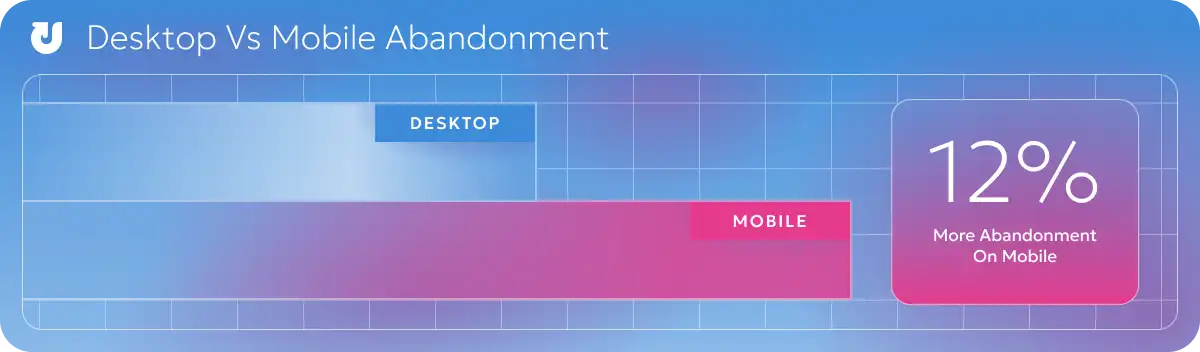
Mobile devices now generate the majority of ecommerce traffic, yet abandonment rates on mobile remain significantly higher than desktop.
Some industry benchmarks report mobile abandonment rates above 80%. Smaller screens, slower load times, and frequent interruptions make it harder for shoppers to complete a purchase.
Improving the mobile experience with clearer layouts, faster pages, and simplified forms can significantly reduce mobile checkout abandonment.
Traffic Source
Traffic source also influences how ready someone is to buy.
Shoppers who arrive through paid ads are often still exploring, while visitors arriving from email campaigns are usually closer to making a decision.
Understanding where shoppers come from helps explain why some sessions convert quickly while others don’t, and can reveal patterns in shopping behavior and purchase intent signals.
Timing
Not every shopper arrives with immediate purchase intent. Some are browsing during a break in their day or researching for later.
Real-world interruptions, like work notifications, phone calls, multitasking, or stepping away from the screen, often pull shoppers away before they finish. In these cases, abandonment reflects poor timing rather than a problem with the product or site.
Shopper Expectations
Shoppers often carry assumptions about pricing, product quality, and trust based on past experiences.
When the on-site experience feels inconsistent with those expectations, whether through unexpected costs, unclear policies, or weak value propositions, hesitation increases.
Common Causes of Cart Abandonment
At the cart stage, abandonment often happens when shoppers start questioning the value of the purchase.
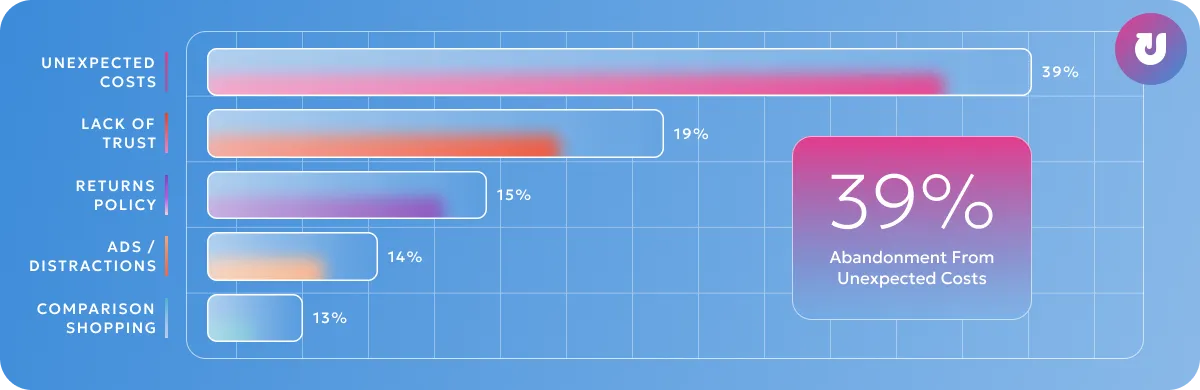
One of the most cited drivers of cart abandonment is unexpected costs.
According to research from the Baymard Institute, 39% of shoppers abandon a purchase because extra costs are too high, such as shipping fees and taxes.
Other common reasons for abandonment at the cart stage include:
- Lack of trust
- Unclear return or exchange policies
- Distracting third-party ad extensions
- Comparison shopping without urgency
These reasons for cart abandonment show why transparency and clear expectations at this stage are critical for reducing shopping cart drop-off.
Understanding these patterns helps brands create stronger abandoned cart recovery strategies that address hesitation before shoppers leave the site.
Common Causes of Checkout Abandonment
Checkout abandonment often reveals the final barriers that prevent an otherwise ready shopper from converting.
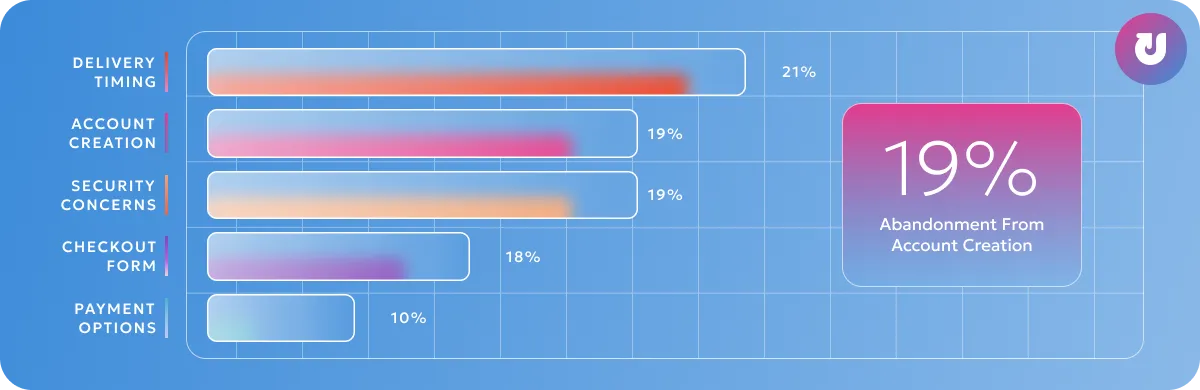
Mandatory account creation remains a frequent barrier to finalizing a purchase. A study found that 19% of shoppers abandon checkout when forced to create an account.
Additional causes of abandonment at the checkout include:
- Limited payment options
- Slow or unclear delivery timelines
- Complicated or lengthy checkout forms
- Trust concerns related to payment security
At this stage, even small issues can create friction in the checkout process and prevent a sale. Because shoppers have already shown intent, removing unnecessary barriers here is one of the most effective forms of checkout optimization.
How to Reduce Cart and Checkout Abandonment
Reducing cart and checkout abandonment requires a combination of prevention strategies, checkout funnel optimization, and abandoned cart recovery tactics after a shopper leaves.
Some issues can be addressed before abandonment happens. Others require improving the cart or checkout experience itself. And in some cases, recovery happens after the session ends.
The goal of abandonment prevention and recovery is to remove friction and support confident decision-making at every stage of the customer journey.
Preventing Abandonment Before It Happens
The most effective way to reduce abandonment is to prevent it in the first place.
Preventing abandonment focuses on eliminating surprises, reducing distractions, and addressing hesitation before a shopper decides to leave.
Effective abandonment prevention includes:
- Set expectations early. Show shipping costs, delivery timelines, and return policies while shoppers are still browsing.
- Limit on-site interruptions. Block unwanted third-party ads or coupon extensions that appear during checkout and disrupt the purchase journey.
- Identify hesitation in real time. Behaviors such as editing the cart or prolonged inactivity signal shopper hesitation. Capturing these moments allows you to respond before the shopper exits.
Preventing problems early keeps shoppers moving forward instead of giving them a reason to leave.
Reducing Cart Abandonment
By the time a shopper reaches the cart, they’ve shown interest, but they may still be weighing their decision.
Instead of pushing for an immediate sale, focus on helping shoppers feel confident about moving forward.
Effective cart abandonment strategies include:
- Reinforce product value. Highlight key differentiators, guarantees, or unique selling points directly within the cart.
- Highlight social proof. Display product ratings, customer reviews, or purchase activity to reduce uncertainty and validate the decision.
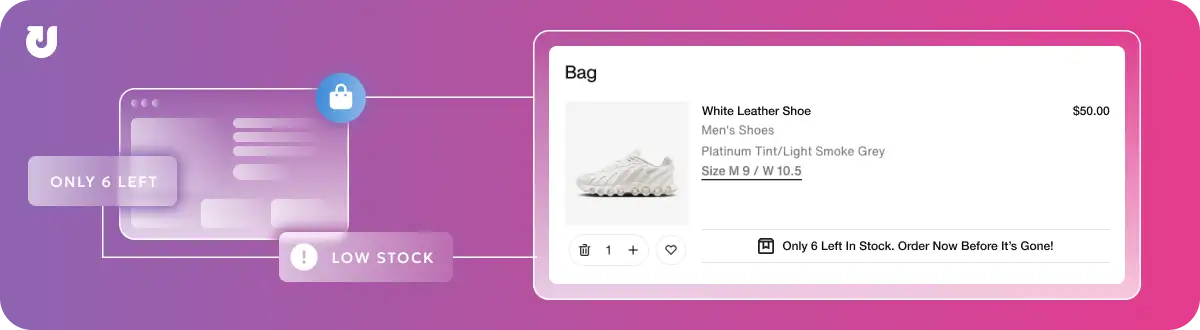
- Introduce light urgency. Surface low-inventory messages or limited-time shipping deadlines when relevant.
- Make it easy to compare options. Allow shoppers to review variants, adjust quantities, or revisit product details without restarting the process.
- Allow shoppers to save their cart. A “save for later” option lets hesitant shoppers return when they’re ready without having to rebuild their cart.
When optimizing your cart, focus on reducing uncertainty rather than creating pressure.
Reducing Checkout Abandonment
By the time a shopper reaches checkout, the decision is mostly made. At the checkout stage, the goal now is simple: make it easy for shoppers to finish the purchase.
Effective checkout abandonment strategies include:
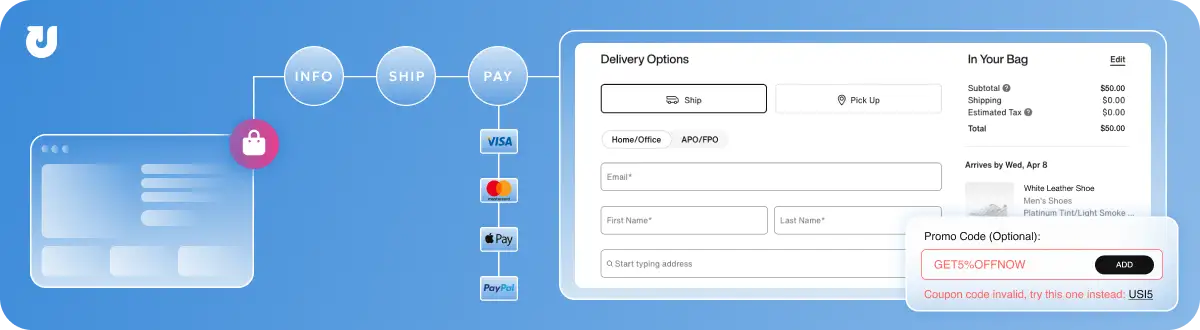
- Show clear progress indicators. Let shoppers see how many steps remain and where they are in the checkout process. Uncertainty about time or effort can increase drop-off.
- Offer flexible payment options. Include digital wallets, multiple card types, and buy now, pay later options that give shoppers flexibility in how they pay.
- Reduce form complexity. Ask only for essential information and avoid forcing account creation before a purchase.
- Reinforce trust. Make return policies, guarantees, and support information visible.
- Prevent coupon friction. Clearly communicate active promotions and handle invalid or expired codes gracefully to avoid last-minute frustration.
Checkout optimization is less about persuasion and more about making it easy for shoppers to finish the purchase.
Re-Engaging Shoppers After Abandonment
Not every shopper completes a purchase in a single visit. Re-engagement gives you another opportunity to continue the conversation after someone leaves.
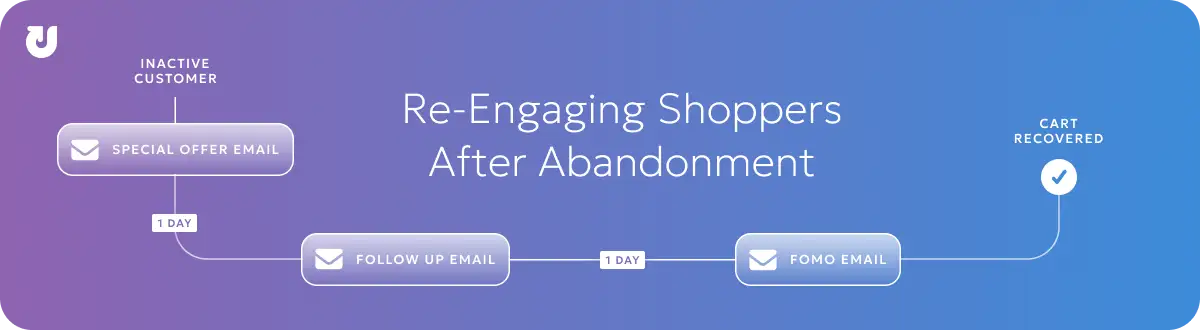
Many brands rely on abandoned cart email strategies to reconnect with shoppers shortly after they leave the site.
These messages should feel helpful rather than aggressive, and restart momentum by addressing hesitation or reminding shoppers of what caught their attention in the first place.
Effective re-engagement strategies include:
- Prioritize timing over volume. A well-timed message shortly after abandonment often performs better than multiple delayed touchpoints. Sending too many messages can reduce trust and increase unsubscribes.
- Start with reminders before incentives. In many cases, a simple reminder featuring the abandoned product is enough. Incentives should be introduced strategically, not automatically.
- Personalize based on behavior. Reference the exact items viewed or left behind. Tailor messaging differently for first-time visitors versus returning customers.
- Choose the right channel. Email, SMS, retargeting ads, and on-site messaging each serve different purposes. For example, remarketing strategies use owned channels like email to reconnect with shoppers quickly, while retargeting relies on paid ads that follow visitors across other platforms.
- Measure incremental lift. Track whether re-engagement campaigns generate purchases that would not have happened otherwise.
Re-engagement should feel like a continuation of the shopping experience, not a separate marketing campaign.
How to Measure Cart and Checkout Abandonment
To measure cart and checkout abandonment effectively, track where shoppers drop off and analyze those exits by stage, device, and checkout behavior.
Looking at a single abandonment rate rarely tells the full story. Here’s how to break it down in a way that actually leads to real improvements:
1. Track Cart and Checkout Data Separately
Start by calculating the abandonment rate for each stage.
Use this formula to calculate cart abandonment rate:
Cart Abandonment Rate = (Carts Created – Checkouts Started) ÷ Carts Created × 100
This tells you how many shoppers add to cart but never start checkout.
Use this formula to calculate checkout abandonment rate:
Checkout Abandonment Rate = (Checkouts Started – Completed Purchases) ÷ Checkouts Started × 100.
This tells you how many shoppers start checkout but do not complete payment.
Together, these formulas show how many shoppers leave at each stage of the buying process. Using these will help you identify your cart exit rate and see where shoppers drop off before completing checkout.
2. Compare Mobile and Desktop Performance
When you review abandonment by device, patterns become easier to spot.
Focus on three things:
- Review abandonment rates for mobile and desktop visitors separately.
- Evaluate mobile usability issues such as page speed, button size, and form length.
- Compare how many shoppers start checkout on each device and how many actually complete the purchase.
Mobile checkout friction, such as slow pages or difficult form fields, can lead to higher abandonment rates. When abandonment is significantly higher on mobile than desktop, focus on usability improvements before adjusting pricing or introducing incentive strategies.
3. Analyze Checkout Step Drop-Off
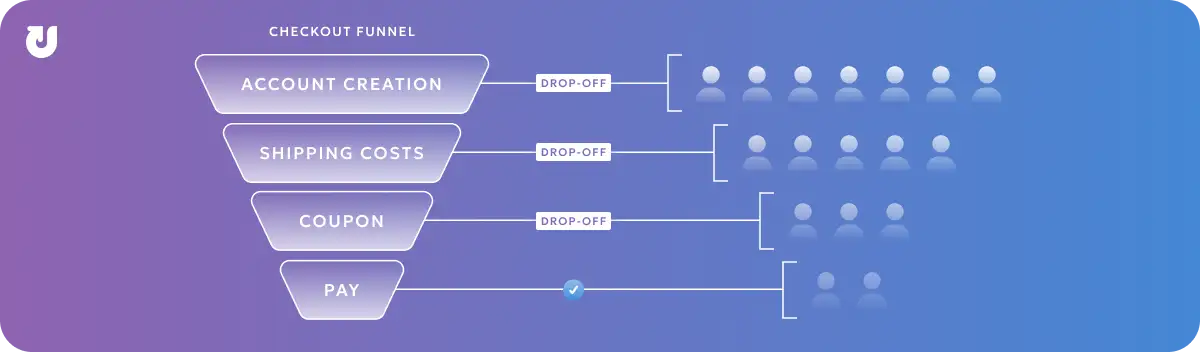
Don’t treat checkout as a single event. Break it into stages to see where exactly shoppers leave.
Look for patterns such as:
- High drop-off at shipping selection
- Abandonment when account creation is required
- Shoppers leaving after entering payment details
- Heavy promo code usage followed by exit
This type of analysis helps pinpoint the exact moment shoppers decide not to finish their purchase.
4. Measure Abandonment Recovery Performance
If you deploy remarketing emails, retargeting ads, or on-site interventions, measure their true impact on abandonment recovery.
- Track how many abandoning shoppers return and convert.
- Compare incentive-based strategies with reminder-only campaigns.
- Monitor incremental lift, not just total recovered orders.
Compare recovery results against normal purchase behavior. This helps you determine whether the campaign created new sales or simply captured purchases that would have happened anyway.
Real Examples of Cart and Checkout Abandonment Strategies
Reducing abandonment looks different depending on where friction occurs and how shoppers behave.
The examples below show real-world cart abandonment strategies that ecommerce brands use to reduce shopper hesitation and recover lost sales. Each example highlights what was implemented, why it worked, and the measurable impact.
Triggering a Targeted Discount
When shoppers showed signs they were about to leave, they were presented with a discount for 15% off their order.
The message displayed their original order total, the dollar amount saved, and the new subtotal after the discount was applied.
Showing the savings calculation in real-time reduced hesitation and reinforced the value of the purchase.
Result: The campaign increased conversions by 15%.

(Source: Online Learning Case Study)
Reminding Shoppers of Free Shipping
When eligible shoppers attempted to abandon, they were reminded that they already qualified for free shipping.
Instead of introducing a new discount, the message reiterated the existing offer and made the benefit more visible at the moment of abandonment.
Highlighting the existing offer helped remove hesitation right before shoppers exited.
Result: The campaign drove an average conversion rate of 8.3%.

(Source: Fashion Free Shipping Reiteration Case Study)
Creating Urgency with Social Proof
When shoppers showed a high likelihood of abandonment, an on-site engagement surfaced an item they recently viewed alongside real-time purchase activity.
The engagement highlighted how many other shoppers had recently purchased that same item to create urgency and build confidence in the decision.
Result: The campaign achieved an 18% conversion rate.

(Source: Non-Incentive Case Study)
Recovering Abandoned Shoppers with Personalized Emails
After shoppers left without completing a purchase, they were sent a series of three follow-up emails.
Each remarketing message featured personalized product recommendations, presented an offer for $50 off orders over $500, and highlighted key value propositions.
This combination helped re-engage shoppers who needed more time to decide.
Result: The campaign achieved a 19% conversion rate.

(Source: Luxury Mattress and Furniture Case Study)
These examples demonstrate that cart and checkout abandonment can be reduced through several ways, including incentives, reminders, social proof, and personalized remarketing.
Cart Abandonment Trends Ecommerce Brands Should Know
Ecommerce technology is evolving quickly, and brands now have more tools than ever to understand why shoppers leave before completing a purchase. Several emerging strategies are helping ecommerce teams detect hesitation earlier and respond more effectively.
AI-Driven Personalization Strategies
Artificial intelligence is making it easier to analyze shopper behavior in real time.
By identifying patterns such as removing items from the cart, pausing on the checkout page, or repeatedly viewing the same product page, AI-powered systems can trigger personalized messages, product recommendations, or incentives at the exact moment hesitation appears.
First-Party Data and Privacy-Driven Strategies
As privacy regulations evolve and third-party cookies disappear, ecommerce brands are relying more on first-party data to understand shopper behavior.
Email capture tools, customer accounts, and behavioral analytics allow brands to track abandonment patterns while still respecting privacy expectations.
Real-Time Behavioral Triggers
Modern conversion optimization tools can detect signals that a shopper is about to leave the site.
Actions like moving the cursor toward the browser bar, extended inactivity, or removing items from a cart can trigger real-time on-site engagements designed to address hesitation before the shopper exits.
Together, these insights help brands move from reactive recovery tactics to more proactive abandonment prevention.
Additional Resources
If you want to explore cart and checkout abandonment strategies in more detail, the resources below expand on the ideas covered in this guide.
- 7 Simple Strategies to Reduce Shopping Cart Abandonment
- 4 Strategies That Reduce Mobile Abandonment
- How to Reduce Ecommerce Friction Across the Customer Journey
- How Can Cart Abandonment Software Benefit Your Business?
- How to Use Exit Detect Technology to Reduce Cart Abandonment
- Understanding Bounce Rates and How to Improve Yours
- 9 Posts to Help You Recover More Abandoned Carts
Frequently Asked Questions About Cart and Checkout Abandonment
What Is Cart Abandonment?
Cart abandonment is when a shopper adds items to their cart but leaves the site before starting checkout. This usually happens during the browsing or comparison stage. In many cases, a shopper will abandon their cart because they are still evaluating options or planning to return later.
What Is Checkout Abandonment?
Checkout abandonment is when a shopper begins the checkout process but leaves before completing payment. This occurs in the final stage of the purchase journey when the shopper is close to buying. Shoppers often abandon checkout when something creates doubt or slows the process, such as limited payment options, complicated checkout steps, or a lack of trust.
What’s the Difference Between Cart Abandonment and Checkout Abandonment?
The key difference between cart and checkout abandonment is where the shopper exits. Cart abandonment happens before checkout begins, while checkout abandonment happens after checkout starts but before payment is completed. Because these exits occur at different stages, they usually signal different types of problems within the purchase process.
Why Do Shoppers Abandon Their Carts?
Shoppers abandon carts for many reasons, including unexpected costs, slow page loads, lack of trust, or simply browsing without immediate intent to buy. In many cases, cart abandonment reflects hesitation or comparison shopping rather than a lack of interest.
What Is a Good Cart Abandonment Rate?
A good cart abandonment rate is typically below 60%. Most ecommerce stores see rates between 60% and 75%, with the average around 70%. What’s considered “good” can vary based on your industry, the types of devices your visitors use, and how smooth your checkout experience feels.
What Is a Good Checkout Abandonment Rate?
A good checkout abandonment rate is typically below 40%. Most ecommerce stores see between 60% to 80%. What qualifies as “good” depends on your checkout design, payment options, and mobile experience.
How Do You Calculate Cart Abandonment Rate?
You can calculate cart abandonment rate using this formula:
Cart Abandonment Rate = (Carts Created – Completed Purchases) ÷ Carts Created × 100
This measures the percentage of shoppers who add items to their cart but do not complete a purchase.
How Do You Calculate Checkout Abandonment Rate?
You can calculate checkout abandonment rate using this formula:
Checkout Abandonment Rate = (Checkouts Started – Completed Purchases) ÷ Checkouts Started × 100
This measures the percentage of shoppers who begin checkout but do not finish payment.
Why Is Cart Abandonment Higher on Mobile Than Desktop?
Cart abandonment is typically higher on mobile because smaller screens, slower page loads, and longer form fields make checkout harder to complete. Mobile shoppers are also more likely to be interrupted by notifications, phone calls, or switching apps. Simplifying forms and improving page speed can significantly reduce mobile checkout abandonment.
How Can I Reduce Cart Abandonment?
You can reduce cart abandonment by removing obstacles during the browsing and cart stages of the purchase journey. Show total costs early, reinforce product value, reduce distractions, and set clear expectations around shipping and returns. When shoppers understand what to expect, they’re more likely to continue to checkout.
How Can I Reduce Checkout Abandonment?
You can reduce checkout abandonment by simplifying the final steps of the purchase journey. Keep checkout forms short, offer flexible payment options, and clearly display return policies and security badges. Removing unnecessary friction at checkout makes it easier for shoppers to complete their purchase.
What Are the Best Ways to Recover Abandoned Carts?
One of the most effective ways to recover abandoned carts is through remarketing emails that reconnect with shoppers shortly after they leave the site. These messages often include product reminders, personalized recommendations, or limited-time incentives. When the timing and messaging match the shopper’s behavior, even a simple reminder can bring them back to complete the purchase.
What Are the Best Abandoned Cart Email Strategies?
The most effective abandoned cart email strategies focus on relevance and timing. Emails that reference the exact items a shopper left in their cart make it easier for them to return and complete their purchase. Reinforcing product value, such as guarantees, benefits, or customer reviews, can also help reduce hesitation. In some cases, adding urgency through low-inventory alerts or limited-time shipping deadlines encourages shoppers to complete their purchase.
How Can I Recover Abandoned Carts Without Offering Discounts?
Abandoned carts can often be recovered by addressing hesitation. On-site messages that appear when shoppers show exit behavior can reinforce product value, highlight customer reviews, or remind visitors about shipping policies and guarantees. If a shopper does leave, follow-up reminder emails can bring them back without requiring a discount.
How Soon Should I Send a Cart Abandonment Email?
Send the first email within one hour of abandonment. This timing is a key part of effective cart abandonment email strategies, as it helps reconnect with shoppers while your brand is still top of mind. Follow-up emails can be sent one to three days later as needed.
What Tools Help Reduce Cart Abandonment?
Brands often use conversion rate optimization platforms, email automation tools, and behavioral analytics software to reduce cart abandonment. These tools help identify when shoppers are about to leave, personalize messages based on behavior, and send follow-up reminders after abandonment.
When Should I Work with a Conversion Rate Optimization (CRO) Partner?
If cart abandonment remains high even after internal improvements, working with a conversion rate optimization partner can help. These partners run structured tests, analyze shopper behavior, and identify friction points across the purchase journey. This support is especially useful when your team lacks time or specialized expertise.