
Black Friday and Cyber Monday continue to represent one of the biggest opportunities of the year for ecommerce brands. In 2025, U.S. shoppers spent $44.2 billion online during Cyber Week, with Black Friday reaching $11.8 billion and Cyber Monday hitting a record $14.25 billion.
But more shopping activity doesn’t automatically mean more conversions. During BFCM, shoppers arrive with different levels of intent, different cart values, and different reasons for hesitating. The most effective experiences recognize those differences and respond accordingly.
Upsellit’s BFCM Case Study highlights six campaigns that took different approaches to engaging shoppers and closing conversion gaps. Looking across them reveals a larger lesson: the BFCM customer journey isn’t one-size-fits-all.
The BFCM Shopper Journey Isn’t One-Size-Fits-All
A shopper browsing products doesn’t necessarily need the same experience as someone with an active cart. Someone with a $150 cart presents a different opportunity than someone with a $20 cart. And a shopper who abandons after engaging with a promotion may need something different when they return.
That means BFCM campaigns shouldn’t rely on a single message or incentive. Timing, cart status, cart value, and previous engagement can all influence what a shopper needs to move forward.
The campaigns featured in Upsellit’s BFCM Case Study demonstrate several ways brands can adapt their experiences to those circumstances.
1. Adjust Your Offer as Shopper Circumstances Change
One BFCM challenge is determining which incentive makes sense for different shoppers.
A campaign featured in the BFCM Case Study adjusted its offers based on cart value and timing. Ten days before Black Friday, abandoning shoppers received free shipping on orders of $25 or more. On Black Friday, that threshold dropped to $15. During Cyber Week, shoppers with carts under $100 received free shipping, while shoppers with carts over $100 automatically unlocked an additional 25% off.
Rather than relying on one offer throughout BFCM, the campaign adapted as both the shopping period and cart value changed.
The takeaway: A relevant incentive doesn’t have to be the biggest incentive. It needs to make sense for the shopper and the moment.
2. Match Messaging to Shopper Intent
Not every visitor is at the same stage of the buying journey.
Another campaign from the BFCM Case Study adjusted messaging based on cart status, distinguishing between shoppers who had not yet started a cart and those with active carts. The experience also changed across different points of the BFCM period, from pre-Black Friday through Cyber Monday.
This approach recognizes an important distinction: a shopper who is still browsing may need a different message than someone who has already demonstrated purchase intent by adding an item to their cart.
Brands can apply the same thinking to their broader BFCM strategy. For example, guided product discovery can help shoppers earlier in the journey, while more conversion-focused engagements can address shoppers who have already shown stronger intent. Learn more about how guided product discovery can boost BFCM conversions.
3. Re-Engage Shoppers Who Leave
Even high-intent shoppers can leave without completing a purchase. During BFCM, that can mean losing a shopper who was already responding to a promotion.
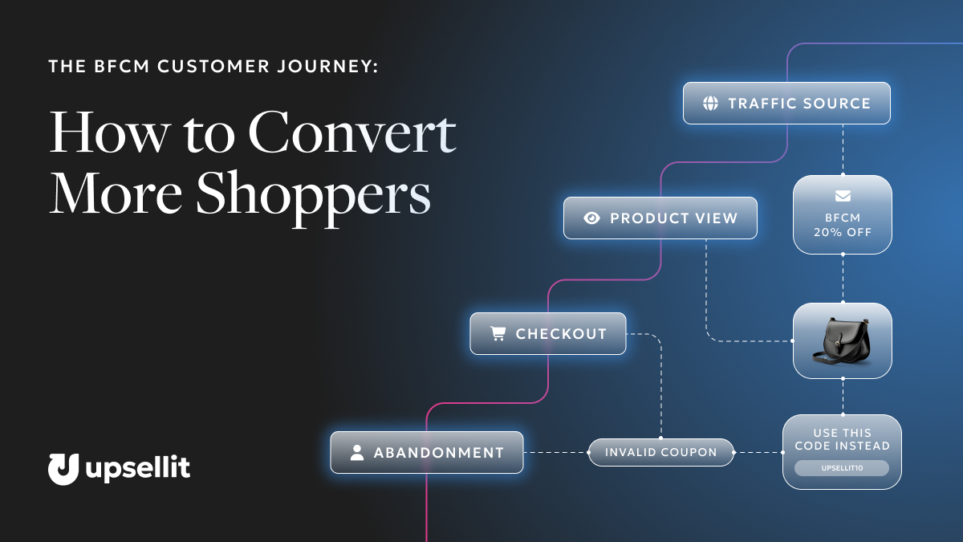
One campaign in the BFCM Case Study used Anonymous Visitor ID to identify previously unknown Black Friday shoppers and send a three-part email series 30 minutes, one day, and three days after abandonment.
The emails highlighted savings of up to 70%, plus an additional 20% off with a unique coupon code. When applicable, personalized Cart Rebuilder links restored shoppers’ carts across devices.
The campaign generated strong engagement, demonstrating how abandonment doesn’t necessarily have to be the end of the BFCM customer journey.
4. Make the Next Incentive Clear
Sometimes shoppers don’t need a completely new offer. They just need to understand what they’re already close to unlocking.
A campaign featured in the BFCM Case Study used a $125 cart threshold to offer shoppers a free pair of leggings alongside a sitewide 30% promotion.
Shoppers with carts below $125 were shown the exact dollar amount they needed to spend to unlock the free gift. Once they reached the threshold, a proactive cart-page engagement prompted them to select their size and redeem the offer.
Instead of simply pushing another discount, the campaign made the next benefit clear and gave shoppers a reason to continue shopping.
5. Give Abandoners a Reason to Return
A shopper who leaves a cart may still be interested in purchasing. The right re-engagement strategy can give them a reason to come back without making them start over.
One campaign from the BFCM Case Study offered shoppers 15% off in exchange for saving their cart. The engagement triggered on exit or after 15 seconds of inactivity and dynamically displayed the shopper’s cart with the offer.
After the shopper’s information was captured, a three-part email series followed. Each email included a personalized Cart Rebuilder link that restored the cart and automatically applied the offer at checkout.
The campaign shows how preserving the shopper’s cart and making the path back to purchase easier can strengthen an abandonment strategy.
6. Keep Abandonment Messaging Consistent With the Offer
BFCM shoppers can encounter promotions across email, paid advertising, social media, influencers, and onsite experiences. If the offer in an abandonment message doesn’t match the promotion a shopper already received, the experience can become less relevant.
A campaign in the BFCM Case Study addressed this by dynamically recognizing the promotion applied to a shopper’s cart and reinforcing those actual savings in the abandonment experience.
Instead of showing a generic offer, the campaign reflected the promotion the shopper had already responded to.
This is especially important during BFCM, when promotions can change quickly and shoppers may be comparing offers across multiple channels.
Putting the BFCM Customer Journey Together
The campaigns in the BFCM Case Study demonstrate that there isn’t one universal approach to converting holiday shoppers.
Instead, brands should consider:
- What the shopper has already done
- What they’re being offered
- What might help them take the next step
That could mean adjusting an incentive, changing the message, making an offer easier to understand, or creating a simpler path back to an abandoned cart.
The strongest BFCM experiences aren’t necessarily the ones offering the biggest promotion. They’re the ones that make the experience more relevant to the shopper in front of them.
Explore the BFCM Case Study
BFCM shoppers are already motivated to buy. The challenge is meeting them with the right experience when they’re ready for it.
The six campaigns featured in Upsellit’s BFCM Case Study show how brands can adapt their strategies around different shopper circumstances to create more relevant conversion opportunities.
Want to see the campaigns behind these strategies? Read the BFCM Case Study.
Ready to find opportunities in your own BFCM strategy? Book a free BFCM audit.