

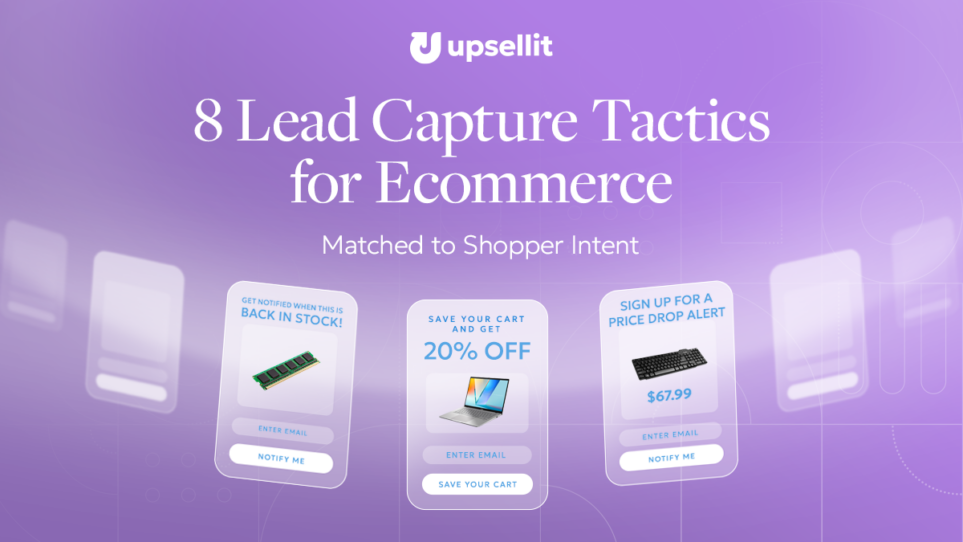
Most ecommerce stores treat lead capture as a single tactic: a popup that fires for every visitor, offering the same discount regardless of where someone is in their journey. The problem is the mismatch. A shopper who just landed on your homepage for the first time needs something different than someone who added a product to their cart and then left.
This post covers eight lead capture tactics organized by shopper intent, early-stage, mid-funnel, high-intent, and post-purchase so you can match your approach to where visitors actually are.
If you want to go deeper on building a full system around this (trigger timing, placement, format selection, follow-up), our complete ecommerce lead capture guide covers the end-to-end framework.
Early-Stage: Capture Browsers Before They Leave
At this stage, shoppers are exploring. They haven’t signaled strong intent yet, so your lead capture approach should feel low-pressure and value-forward.
1. Newsletter Sign-Ups
Newsletter opt-ins tend to attract visitors who aren’t ready to buy but are genuinely interested in your brand. That’s a valuable segment because they’ve self-selected into an ongoing relationship rather than just claiming a coupon.
The value of this list compounds over time. Regular touchpoints like new arrivals, promotions, and editorial content keep your brand present for shoppers in a slower consideration cycle. When the timing is right, they’re more likely to convert because you’ve stayed visible.
What to test: Value proposition framing (“Get weekly deals” vs. “Be the first to know”); placement on homepage vs. footer vs. inline within content.
2. Gated Quiz Results
A product quiz is one of the most effective early-stage capture formats, especially for stores with a wide or complex product range. A shopper who lands without knowing exactly what they want benefits from the guidance a quiz provides, and capturing the lead happens naturally in the process.
Quizzes also generate something most opt-in formats don’t: structured preference data. Instead of a generic welcome flow, you can follow up with recommendations tied directly to what the quiz revealed, which shows up meaningfully in engagement rates.
What to test: Gating results before vs. after showing a partial answer; number of quiz questions; how personalized the result framing feels.
Mid-Funnel: Capture Shoppers Who Are Interested but Blocked
At this stage, shoppers have identified what they want but something is standing in the way, whether that’s price, availability, or timing. Your lead capture should acknowledge the barrier and give them a clear reason to stay connected.
3. Price Drop Alerts
Price-sensitive shoppers make up a large segment in ecommerce, and price drop alerts are a natural fit for where they tend to drop off. A shopper who likes a product but is hesitant on price hasn’t left your funnel, they just need more time. Giving them a way to opt in for a notification keeps them engaged rather than pushing them toward a competitor.
The ask is low-friction because you’re not asking them to commit to buying, just to stay informed. When the price does drop, you’re reaching someone who already signaled clear purchase intent.
What to test: Placement on product page (above vs. below the fold); copy framing (“Alert me” vs. “I want this when it drops”); whether to include the current price in the opt-in.
4. Back-in-Stock Notifications
Out-of-stock products are a natural mid-funnel capture moment. A shopper who found exactly what they want and hit a dead end is highly motivated. The path to conversion is interrupted, not abandoned, and a back-in-stock opt-in keeps them connected until the product is available again.
The ask works because it’s purely in the shopper’s interest. The contact information you collect also comes with useful context: you know exactly which product they want, which makes follow-up straightforward and relevant.
What to test: Notification copy (transactional vs. urgency-driven); whether to include an estimated restock date; single-field email capture vs. also collecting SMS.
High-Intent: Capture Shoppers on the Verge of Buying
At this stage, shoppers have engaged deeply with specific products, added items to a cart, or are showing exit signals. Lead capture here is focused on recovery, keeping a near-purchase from disappearing entirely.
5. Save Your Cart
A shopper with a full cart has already done the work of selecting products. Giving them the option to save their cart via email removes the friction of losing their selections and creates a natural, low-pressure capture moment.
The opt-in can work two ways. As a standalone utility play, it’s a helpful feature: “Save your cart and come back when you’re ready.” Combined with an incentive, it becomes a recovery tool: “Save your cart and get 10% off when you complete your order.” The standalone version suits stores that want to avoid discount dependency; the combined version adds pull for shoppers who need an extra nudge.
What to test: Utility framing vs. incentive-combined framing; trigger timing (exit intent vs. time-in-cart vs. idle behavior); whether to show cart contents in the follow-up email.
6. Incentive-Based Opt-Ins
Incentive-based capture performs best when it’s triggered by high-intent behavior, such as a shopper who has viewed a product multiple times, engaged with the cart, or is showing exit signals. A well-timed discount or free shipping offer at that moment can be enough to keep them in your funnel.
Deploying this tactic too early is where most stores run into trouble. A sitewide popup offering 10% off to every new visitor captures some emails but also trains shoppers to wait for a discount and erodes margin on buyers who would have converted anyway. Targeting the offer to high-intent signals is what makes it a revenue recovery tool rather than a margin leak.
What to test: Discount amount vs. free shipping as the offer; percentage off vs. dollar off framing; urgency-based copy (“today only”) vs. straightforward value messaging; threshold-based triggers (exit intent vs. time-on-page vs. cart engagement).
7. Chatbots
A well-placed chatbot can capture leads from shoppers who have questions before committing. The chatbot handles the question and collects contact information in the process, in a conversational way that tends to feel less transactional than a popup.
Because chatbots run around the clock, they’re particularly useful for capturing leads during off-hours. For stores with complex products or a high volume of pre-purchase questions, this can drive meaningful lead volume while also improving the overall shopping experience.
What to test: Proactive vs. passive trigger (chatbot initiates vs. waits for shopper to open); where in the conversation to request email; tone and personality of the opening message.
Post-Purchase: Capture New Shoppers Through Customer Referrals
At this stage, the relationship between you and your customers shifts. They’re no longer evaluating whether to trust your brand because they’ve already converted. Lead capture here can turn satisfied customers into a direct acquisition channel for new shoppers.
8. Refer-a-Friend
Referral programs work because they tap into something more credible than advertising: personal recommendations. Reaching customers shortly after a positive purchase experience creates a natural opportunity to turn satisfaction into peer-to-peer acquisition. Because of this, referral programs often bring in shoppers with higher trust and purchase intent than traditional traffic sources.
The best-performing referral offers are balanced and easy to understand. Giving both the brand advocate and the referred friend a reward creates a stronger incentive to participate while keeping the experience customer-friendly rather than overly promotional.
What to test: Reward structure (give $10/get $10 vs. rewarding only the referrer); placement (order confirmation page vs. follow-up email); timing of referral request.
A Note on Testing Across All Eight
Each tactic above includes specific testing ideas, but the underlying principle is the same: small changes to copy, timing, and design can have an outsized impact on capture rates, and the only way to know what’s working is to measure it deliberately.
Change one variable at a time and give each test enough traffic to reach statistical significance before drawing conclusions. The goal is to build a system that improves continuously, not just find a winning variant once.
For a full look at how to structure optimization across your entire lead capture system, including timing rules, segmentation, and UX experiments, see our ecommerce lead capture guide.
Match the Tactic to the Moment
The eight tactics above work best when they’re matched to where a shopper actually is. An early-stage browser and a high-intent shopper need different things, and your lead capture strategy should reflect that.